

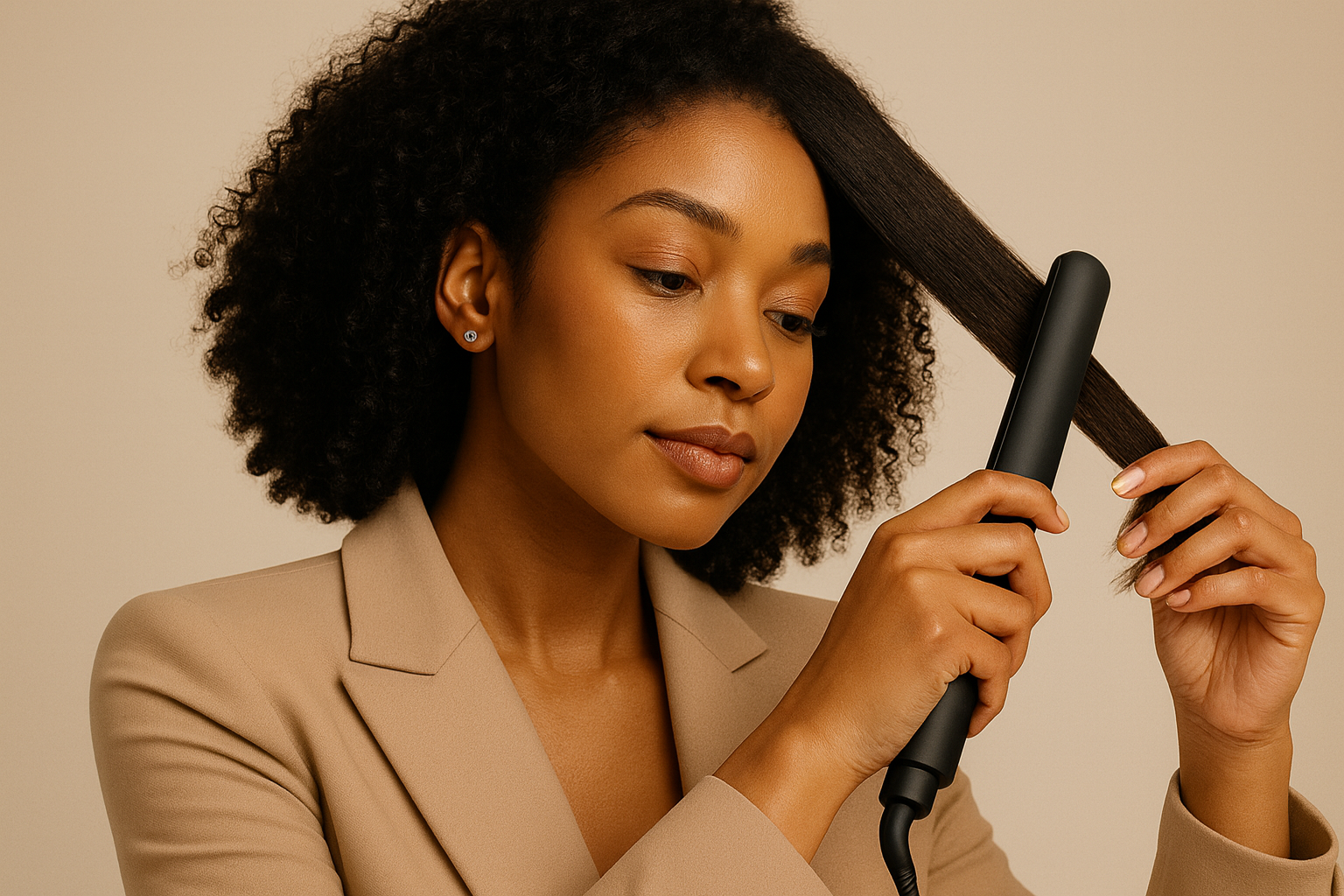
Those Outdated Rules Were Never Written with Us in Mind
Let's be real. Most corporate grooming policies are written in vague language that leaves too much room for bias. Words like "tidy," "presentable," and "appropriate" often end up being interpreted through a Eurocentric lens. Translation: natural textures, braids, locs, and twists get questioned, while straightened styles are silently endorsed. That isn't about professionalism — it's about control.
And here's the bigger issue: when these rules aren't challenged, they quietly reinforce the glass ceiling. Black women spend extra money, time, and energy altering their hair to "fit" while our peers climb ladders with one less barrier. That cost is both financial and emotional, and it adds up.
Have you ever straightened your hair specifically for a "big meeting" because you worried your natural texture wouldn't be taken seriously?
Share Your StoryIf Companies Were Serious, Their Policy Would Read Like This
If companies actually cared about inclusion, here's what their grooming section would look like:
Inclusive Grooming Policy Framework
- Say It Plain: "Employees are free to wear their natural hair texture, protective styles (including braids, locs, twists, wigs), and culturally significant hairstyles."
- Stop the Double Standards: What applies to one applies to all.
- Focus on Safety, Not Style Policing: Hair should only be regulated if there's a health or safety issue — period.
- Put Respect in Writing: No discrimination or microaggressions based on hair.
- Align with the CROWN Act: Don't just perform inclusion, prove it with policy.
This is what protection looks like on paper — not coded language that leaves you vulnerable.
Does your company's grooming policy explicitly protect natural hair and protective styles, or does it use vague language that could be weaponized?
Tell Us BelowHere's What's In It for You
A policy like this benefits you directly:
- Freedom to Show Up as You Are: Wear your natural hair, rock protective styles, or switch it up without fear of "compliance issues."
- Equity on the Page, Equity in the Office: Everyone is held to the same standard, removing the pressure to assimilate.
- A Framework for Pushback: Once you know what inclusive policy looks like, you can use it to challenge the biased one you're handed.
And here's the key: once you know what inclusive policy looks like, you can use it as a framework to challenge the biased one you're handed.
How much time and money have you spent on hair manipulation to fit corporate standards that were never designed for you?
Drop a Comment"Your hair has always been professional. It's the policies that need the makeover."
Stop Accepting Policies That Don't See You
So, what should you do next?
- Read your company's grooming policy and circle the vague, coded words.
- Compare it to the framework above — where's the gap?
- Bring it back with receipts. Share examples of inclusive policy language and ask why your company isn't aligned with the CROWN Act.
You don't have to accept policies that punish you for existing as you are.
What's one change you could advocate for in your company's grooming policy using the framework above?
Let's DiscussYour Hair Has Always Been Professional
If you haven't already, check out our first piece — Help! My Company Has Grooming Language That Targets Natural Hair — where we break down how to spot bias in your handbook. And if you're hungry for more big-sister-in-corporate truth, you'll find more articles like this on our site, especially under the Career Chats section.
Because here's the truth, sis: your hair has always been professional. It's the policies that need the makeover.
Related Articles
Help! My Company Has Grooming Language That Targets Natural Hair
How to spot bias in your employee handbook and what to do about it.
The CROWN Act: Know Your Rights at Work
State-by-state protections and how to use them in your workplace.
Why I No Longer Translate My Hair Choices for Colleagues
Reclaiming your time and energy from the emotional labor of explaining.
Navigate Corporate on Your Terms
For more real talk on navigating corporate culture while protecting your peace and advocating for yourself.
Explore Career Advice







Let's Continue the Conversation
Have you ever challenged biased grooming language at your company? What happened, and what advice would you give to someone thinking about speaking up?