

The workwear question
Is my pencil skirt unprofessional—or am I just curvy?
A pencil skirt is not automatically unprofessional, and curves are not a policy violation. Use neutral criteria to assess the garment—and consistent enforcement to assess the workplace.
Start here
Separate the skirt from the body wearing it.
Two women can wear the same skirt, at the same length, in the same fabric, and receive different reactions because the garment follows their bodies differently. That does not mean every fit works in every office. It does mean “your curves are visible” is not a useful professional standard.
The fair question is whether the garment meets objective requirements for the job and setting. Is it opaque? Can you sit and walk without constantly adjusting it? Does the hem remain where the policy requires? Is the fabric and styling appropriate for the level of formality? These questions can be applied to anyone.
If a manager cannot identify a specific feature or written standard—and comparable coworkers are treated differently—the issue may be inconsistent enforcement rather than the skirt itself. The EEOC says appearance standards should be neutral and consistently applied across racial and ethnic groups.
Professionalism should describe the garment and the work—not punish the shape of the woman wearing it.
The five test fit check
A useful answer comes from observable details.
Stand, sit, walk, climb a stair, and look in daylight. Judge the garment at hour six—not only in the fitting-room pose.
Written policy
Check the actual dress code for hem, slit, fabric, safety, uniform, or client-facing requirements.
Ask · What rule appliesOpacity
Look near a window and under bright light. Include seams, pockets, lining, and the area stretched while seated.
Fix · Lining or denser fabricMovement
You should be able to sit, walk, and take stairs without the skirt climbing or requiring constant pulling.
Fix · Vent, length, or easeFit
Persistent horizontal pulling, a rolling waistband, or strained seams are garment-fit signals—not evidence that your body is wrong.
Fix · Size up and tailorSetting
A court appearance, lab floor, creative office, client dinner, and casual Friday may require different styling.
Ask · What does the day require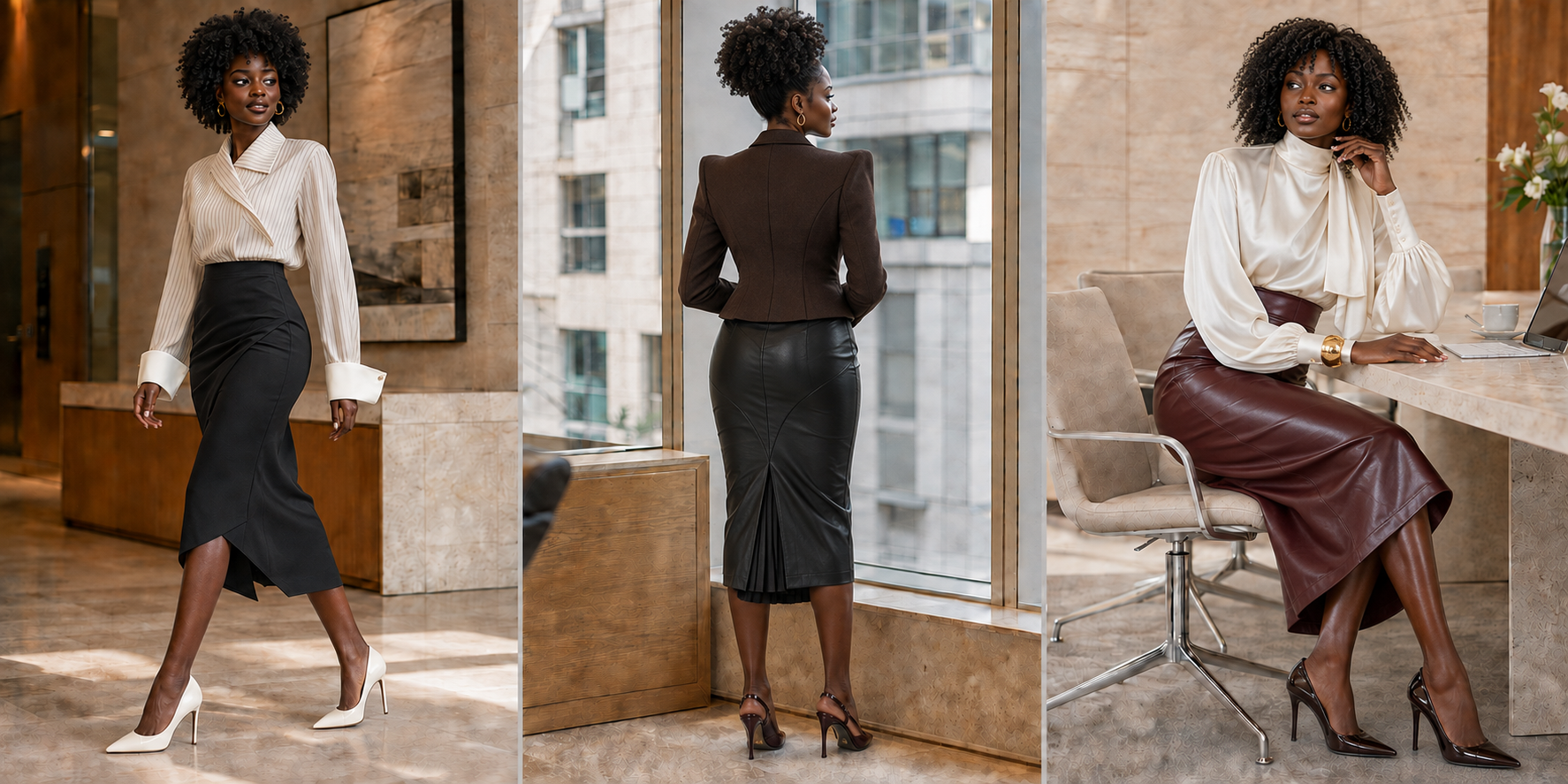
Do not confuse the wearer with the tailoring
The distinction that matters
Curvy does not mean too tight.
A fitted skirt will trace a curvy body. That is what fitted clothing does. The test is whether the skirt functions: the waistband stays put, seams lie correctly, the fabric remains opaque, the vent supports movement, and the hem does not migrate several inches when you walk.
- Visible shape is a body characteristic, not a fit defect.
- Fabric strain is information about size, cut, stretch, or tailoring.
- Repeated adjustment is a sign the garment may not work for that day.
- Unequal scrutiny is information about how the standard is being applied.
When someone comments
Turn a vague judgment into a specific standard.
Choose the kind of feedback you received. The script keeps the conversation professional while asking for something you can evaluate consistently.
Ask for the observable concern
“Can you point me to the written standard and clarify whether the concern is length, fabric, opacity, or another specific feature?”
Why it works: You replace a subjective label with criteria that can be applied to everyone.
Four ways to wear it
Style the skirt for the workday you have.
A pencil skirt becomes more or less formal through fabric, length, top, layer, and shoe. Your figure does not need to disappear for the outfit to read as composed.
Light structure
Lined pencil skirt + refined shell + lightweight blazer + closed-toe slingback.
Let tailoring leadSoft authority
Ponte pencil skirt + fine-gauge knit + loafer or polished flat + structured tote.
Comfort without losing shapeLayer on arrival
Breathable blouse + lined skirt + blazer carried rather than worn + stable low heel.
Build the base for outsideQuiet contrast
Textured midi pencil skirt + crisp shirt with relaxed sleeves + loafer.
Use texture, not clutter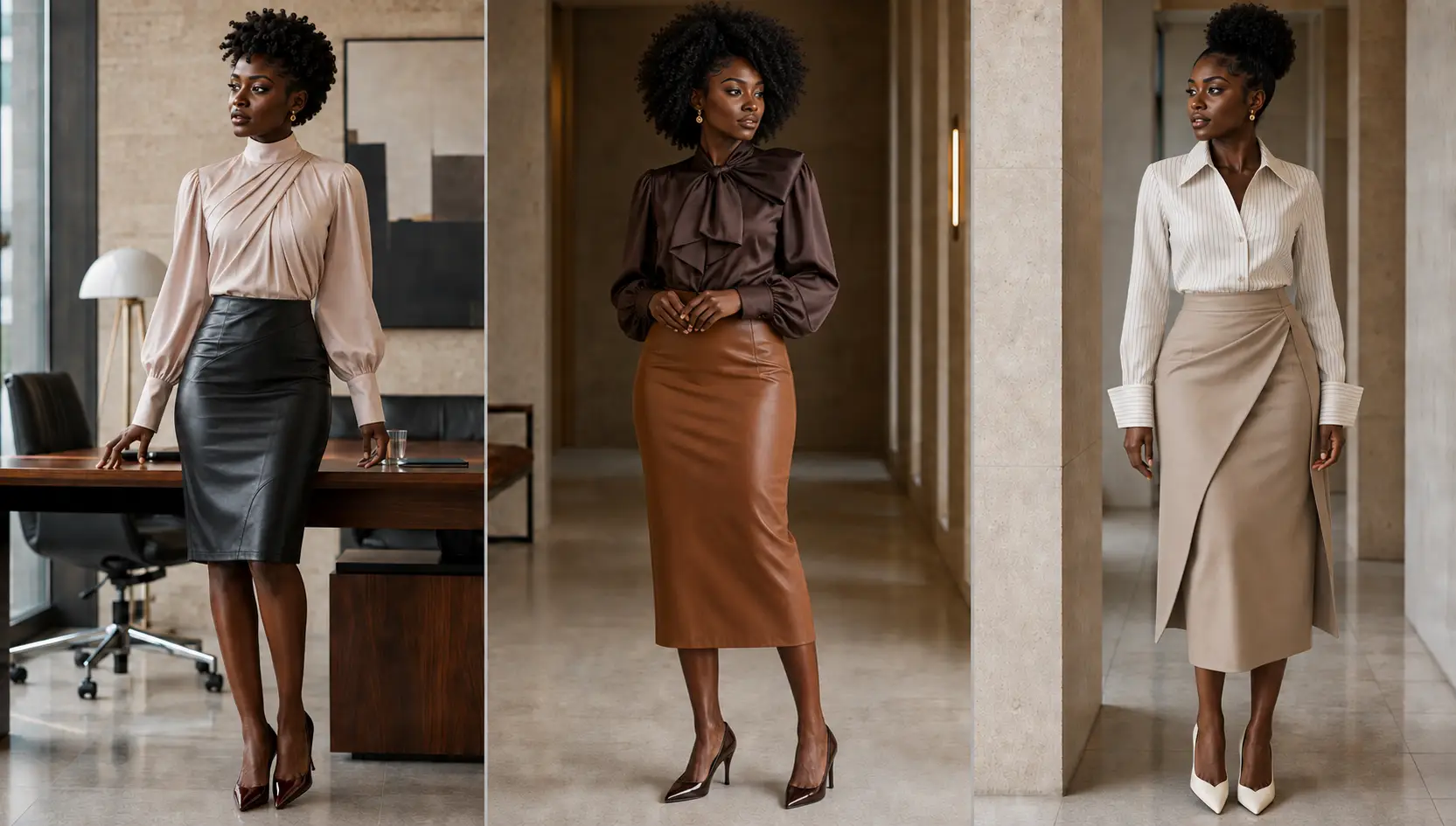
Need the rest of the wardrobe to work harder? The Spring and Summer Workwear Capsule includes 24 repeatable office outfit formulas.
Fabric changes the message
The same silhouette can read completely differently.
Structured ponte
Stretch with recovery makes it useful for long sitting days. Look for a dense knit that does not become shiny or transparent under tension.
Lined woven
Wool blend, twill, or suiting fabric reads more formal. The lining should move independently rather than twisting around the body.
Textured seasonal fabric
Linen blend or subtle texture can work in warm weather when the skirt remains opaque, recovers from sitting, and holds its intended shape.
Thin rib or bodycon knit
Often reads more casual because it reveals seams, undergarment lines, and fabric tension. Add structure or choose a denser alternative when the setting is formal.
When the rule moves
Document the standard and how it is enforced.
A single comment may be clumsy feedback. A pattern can affect assignments, evaluations, or your ability to do the job. Preserve enough detail to tell the difference.
Request the policy
Ask for the written language and the exact garment feature said to be outside it.
Confirm in writing
Summarize the feedback, policy cited, requested change, and your understanding of the standard.
Track consistency
Record dates, comparable situations, who enforced the rule, and any impact on work or opportunity.
Use the right channel
Raise a repeated or consequential pattern through your manager, employee relations, union, or policy-designated reporting route.
Legal context: Employers generally may establish dress codes for employees or job categories. Legal issues can arise when standards are discriminatory, impose unequal burdens, conflict with protected accommodations, or are applied differently based on protected characteristics. Review the EEOC overview of prohibited employment practices and seek qualified advice about your facts. Body shape or weight protections vary by jurisdiction and circumstance. This article is practical workplace guidance, not legal advice.
Keep reading
Your appearance should not become everybody’s business.
Questions, answered
The pencil skirt fine print.
Are pencil skirts appropriate for work?
They can be. Match the garment to the written policy, role, setting, and safety requirements. Then evaluate opacity, length, fabric, fit, and movement using the same criteria you would apply to anyone else.
How tight is too tight?
There is no universal measurement. Look for function: comfortable sitting and walking, an opaque fabric, seams that are not straining, a waistband that stays flat, and a hem that remains close to its intended position.
Does a curvy body automatically make a skirt more revealing?
No. A fitted garment will show the outline of the body wearing it. Evaluate the garment’s actual coverage, opacity, movement, and fit rather than labeling visible curves as inherently inappropriate.
What should I do with vague dress-code feedback?
Ask for the written standard and the specific observable feature at issue. Confirm the guidance in writing if it affects what you may wear, where you may work, or how you are evaluated.
Sources and scope
Where the policy guidance comes from
- U.S. Equal Employment Opportunity Commission, Section 15 Race and Color Discrimination. Appearance standards, neutral criteria, and consistent enforcement across racial and ethnic groups.
- U.S. Equal Employment Opportunity Commission, Prohibited Employment Policies and Practices. General dress-code authority and accommodation context.



Your turn
Has a dress code ever felt different on your body?
Tell us what was said, whether anyone could name the actual rule, and how you handled it. Leave out names and identifying employer details.
Join the conversation ↓