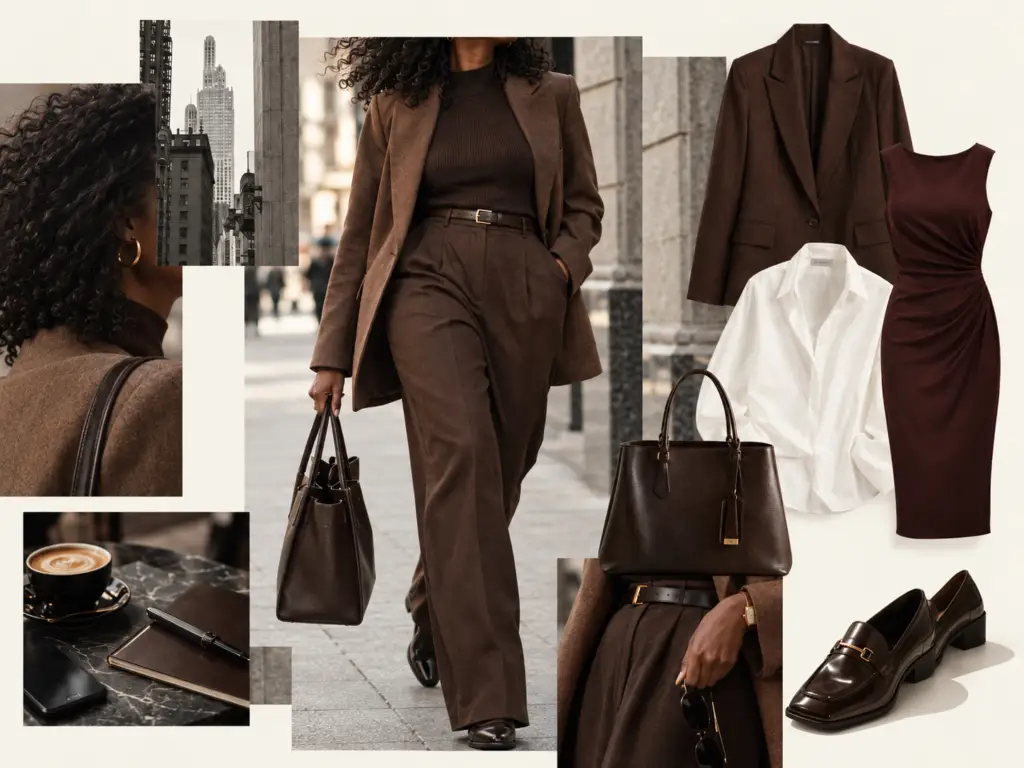
What is business casual, anyway?
The confusing part: “business casual” is not standardized. The solution is simpler than the phrase—read the room, choose one clear work signal, then raise or lower the polish for the day in front of you.
Business casual is a range. Your real skill is knowing where to land inside it.
Polished separates, chosen for context.
A blazer and heels are options, not entry requirements.
The outfit still has to support the work and the setting.
Industry, company, city, team, season, and agenda all matter.
Why “business casual” feels weirdly hard.
The phrase sounds like a rule, but in practice it behaves more like a range. The same jeans, sneakers, sleeveless top, or dress can read completely differently depending on the company, the room, and the day. So stop trying to memorize a universal list. Use a repeatable decision instead.
The real question is whether your office allows denim and whether the rest of the outfit carries enough polish.
In some offices, absolutely. In others, never. Clean condition helps, but culture and the day’s stakes decide.
Very casual workplaces create the opposite problem: wanting to look senior or intentional without appearing costume-level formal.
You have the least information when the pressure feels highest. Start one notch polished, then observe before shopping.
What does the written policy prohibit or require? Then notice what credible people actually wear.
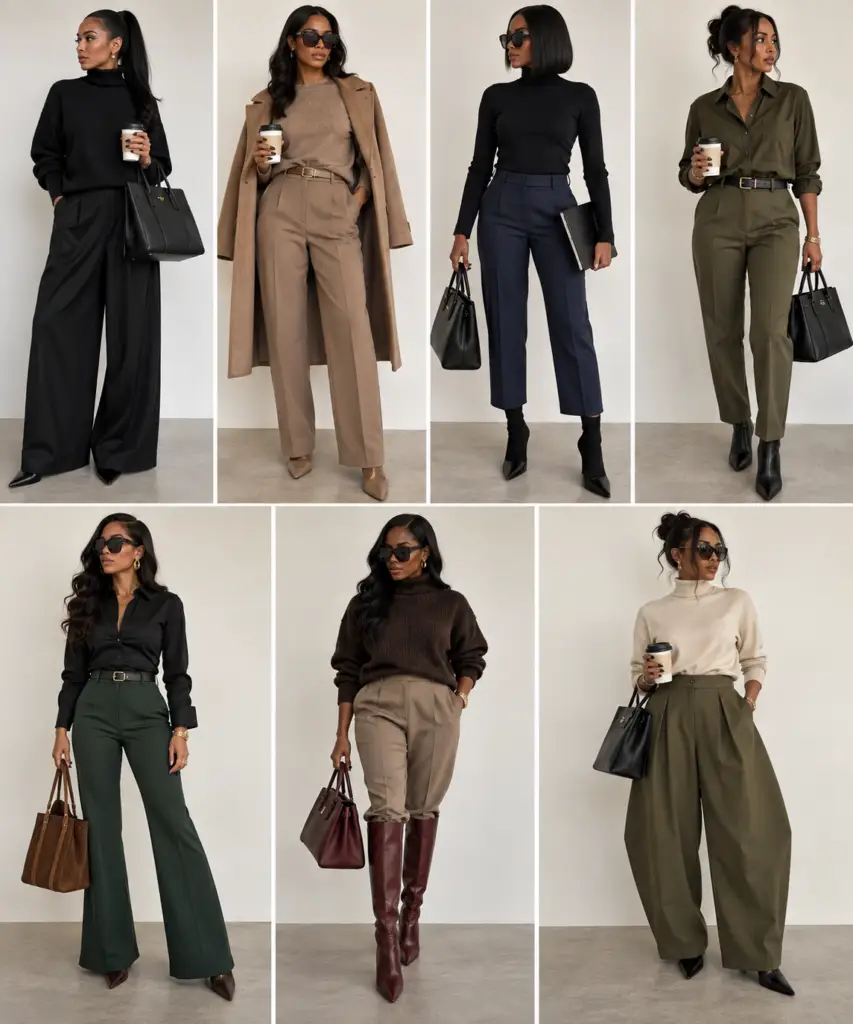
Tailored trouser, refined knit, structured bag, polished shoe, blazer, or clean column silhouette. One can do a lot of work.
Client, interview, presentation, or senior-leader meeting? Upgrade one signal instead of rebuilding the entire outfit.
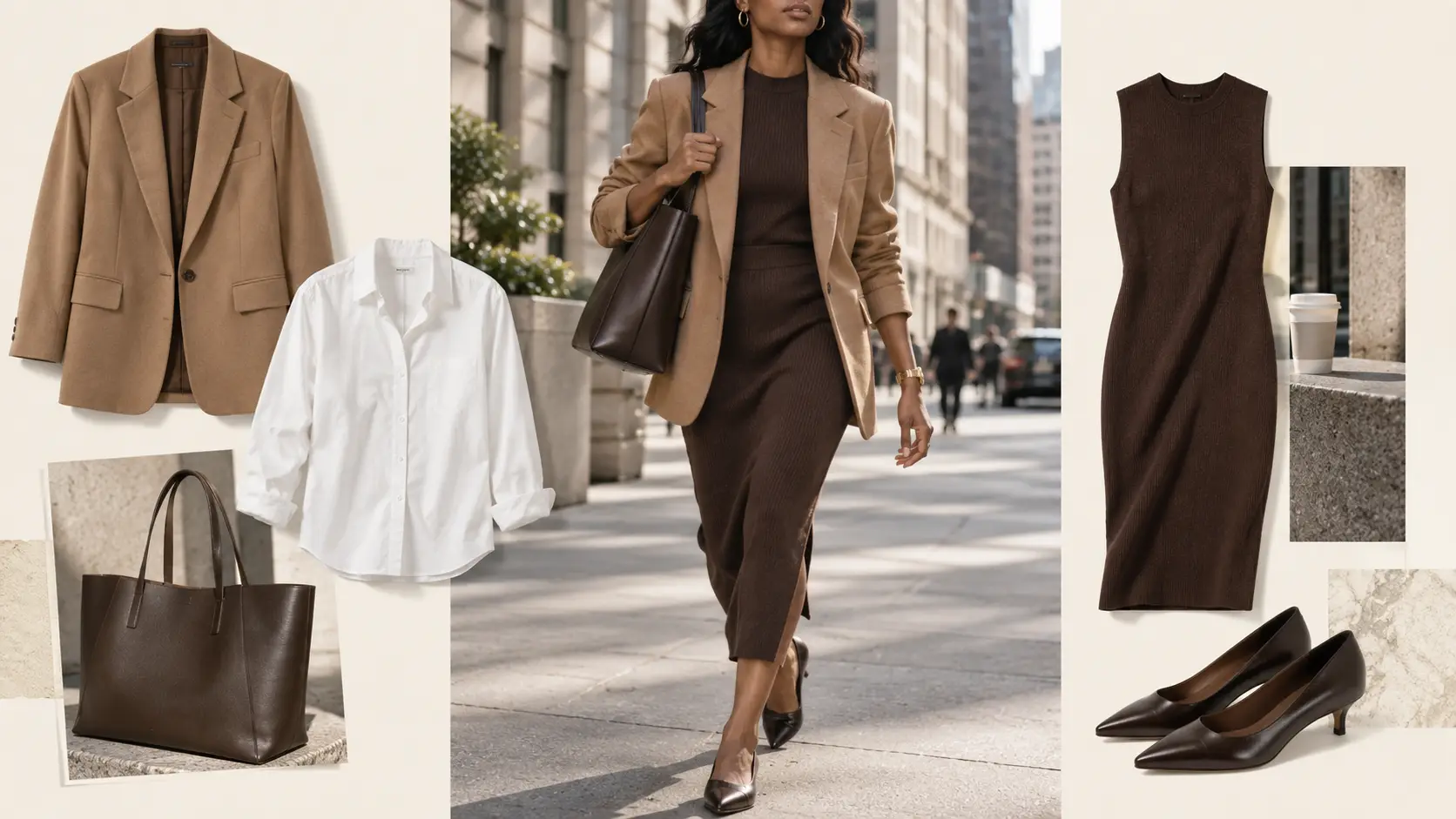
The email says business casual. Your closet hears five different instructions.
Maybe you are starting a new job. Maybe the invitation says “business casual” and nothing else. Maybe your office has become more relaxed, but the senior leaders still arrive in structured tailoring. The phrase feels like an answer while quietly handing the decision back to you.
There is no single, universal business-casual outfit. Current career guidance—and the questions women repeatedly ask when starting new jobs—circle the same problem: the definition shifts by company, industry, geography, and situation. The useful definition is this: business casual is professional clothing with some formality removed—not professionalism removed. That could mean a soft suit with a knit top in one office, or dark denim with an architectural blouse in another. Indeed’s updated guide makes the same central point: the company’s own norms matter.
The best approach is not to memorize a list of “allowed” clothes. Learn how to read the room, then build an outfit that is intentional enough for the day and comfortable enough for you to do your job. For complete outfit formulas, seasonal examples, and a wardrobe framework, start with our business casual work outfits for women hub.
Business casual is not a personality test. It is a context clue.
Read the room.
Four signals matter more than a generic Pinterest checklist. Start with the clearest one you have, then use the others to narrow the range.
The written policy
Check the handbook, onboarding email, event invitation, or safety rules. Words such as “no denim,” “closed-toe footwear,” or “client ready” are actual boundaries—not styling suggestions.
Ask: What is explicitly required?The lived norm
Notice what trusted peers and respected leaders wear on ordinary days—not only the most casual person in the building. Look for patterns rather than copying one person.
Ask: What consistently looks at home here?The day’s stakes
A heads-down Tuesday, board presentation, site visit, conference, and client dinner do not need the same level of formality—even inside the same company.
Ask: Who will I meet, and what must I do?Your actual body
You need to sit, commute, bend, present, eat, and think. If the outfit requires constant adjustment, it is not supporting your work—no matter how “appropriate” it looks standing still.
Ask: Can I forget the outfit once I leave home?For a first day, presentation, interview, or unfamiliar room, go one notch more intentional than your best guess—not one whole identity more conservative. Upgrade one signal: the shoe, the fabric, the jacket, or the bag. Keep the rest recognizably yours.
Same woman. Different room.
Think in levels instead of hard categories. The center of the dial is business casual; move left or right as the culture and the day require.
Ease is visible.
Relaxed denim, clean tees, casual dresses, and sneakers may lead. The office is telling you that comfort and individuality carry more weight than formality.
One piece anchors.
A tailored trouser, refined shoe, structured knit, polished skirt, or sharp jacket gives the outfit a clear work signal. Not everything has to be formal.
The agenda has stakes.
More structure, quieter finishing, and sharper footwear suit presentations, leadership meetings, interviews, conferences, and client-facing moments.
Formality is the brief.
Matching or coordinated tailoring, refined fabrics, and conservative finishing lead. Common in formal legal, finance, government, and executive settings.
You do not need a separate wardrobe for all four levels. You need pieces that can move one notch in either direction.
Build from one clear signal.
These are modern starting points, not uniforms. Choose the shape that feels most like you, then adjust the finish for your office.
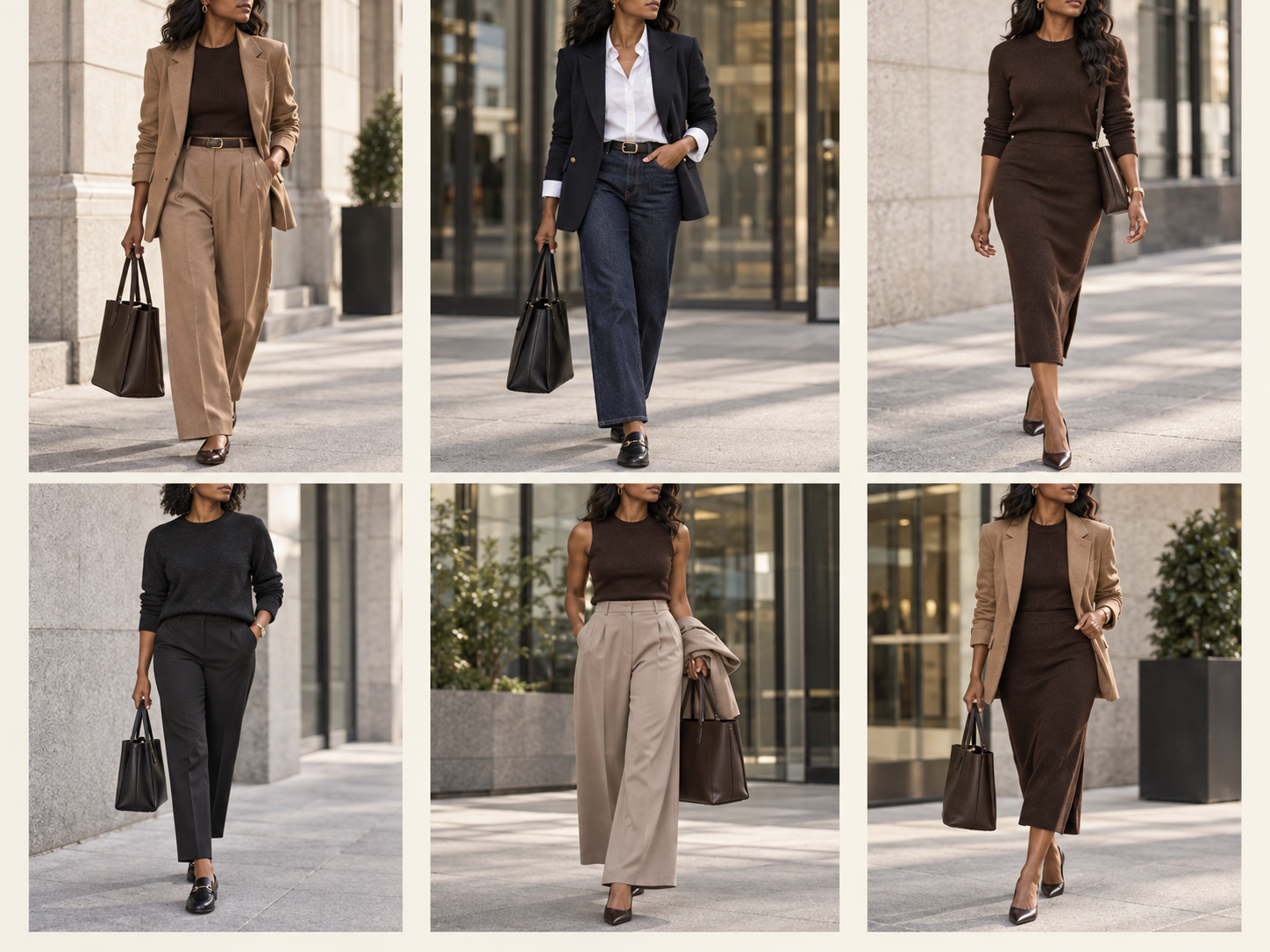
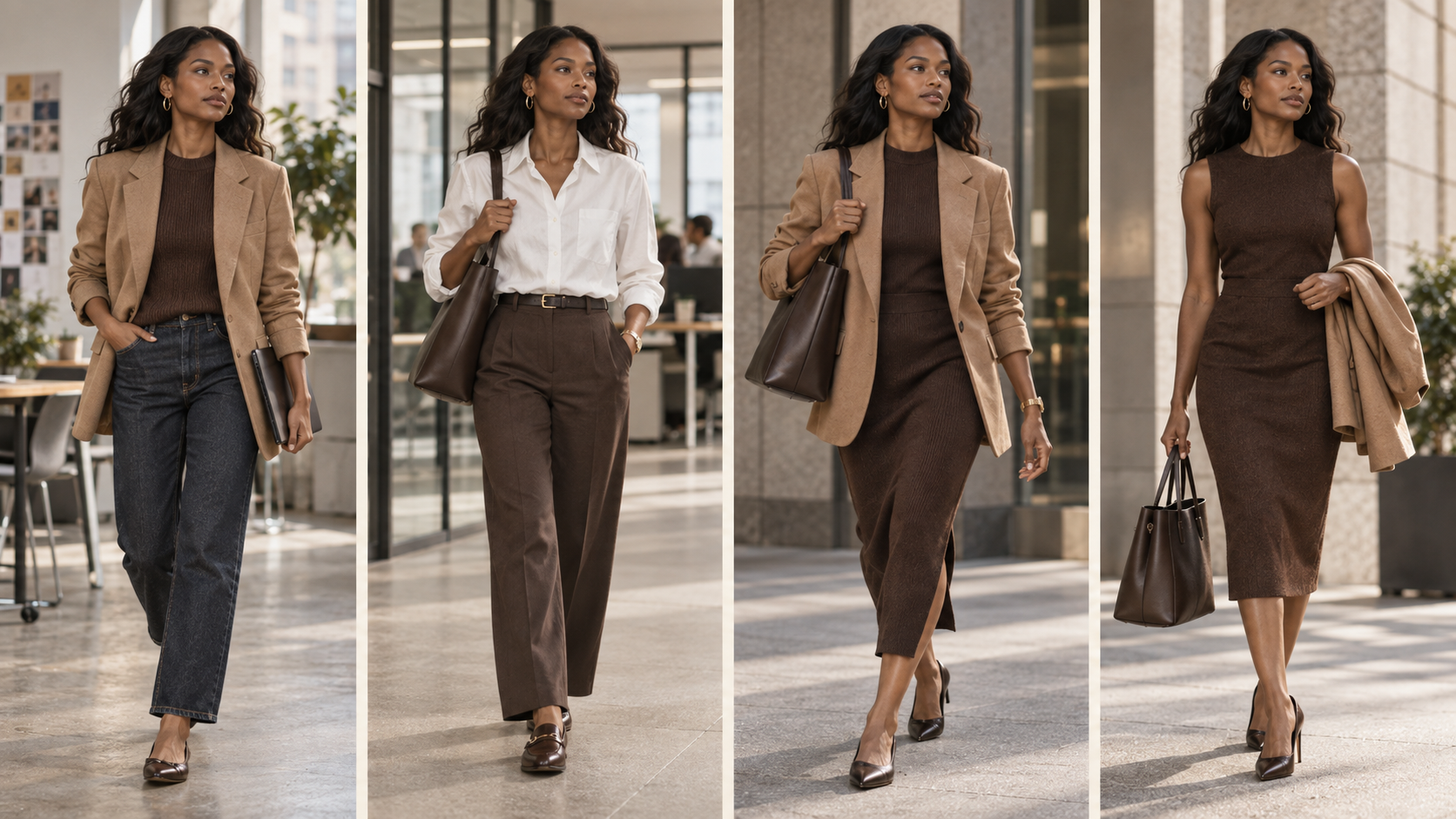
Fluid trouser + fitted knit + sculptural loafer
The trouser carries the polish. The knit makes it easy. A strong loafer keeps the relaxed volume intentional.
Move the dial: Add a longline blazer for a leadership meeting.
Dark denim + architectural blouse + pointed flat
Denim can work when policy permits it. Keep the wash clean and let a shaped neckline or refined shoe do the formal work.
Move the dial: Trade denim for a column trouser when the day has stakes.
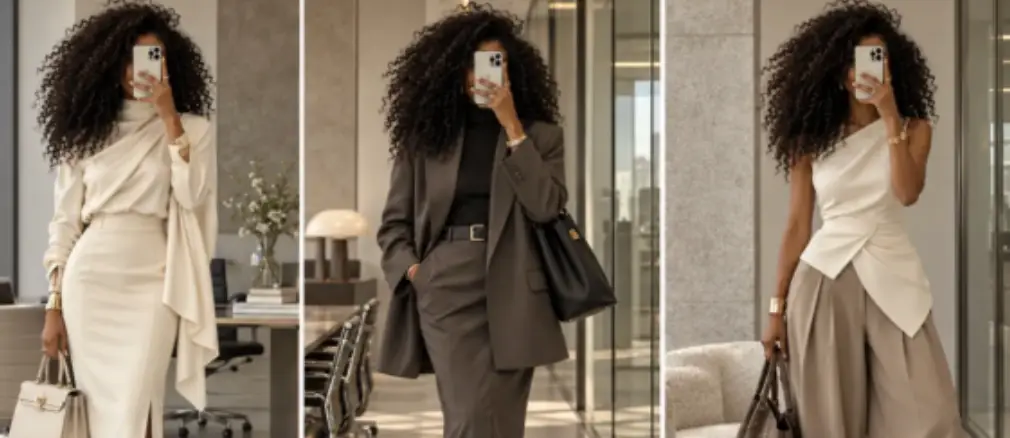
Column skirt + fine knit + cropped jacket
A clean vertical line feels composed without requiring a traditional matching suit. Let proportion make it modern.
Move the dial: Keep the jacket on; choose a quieter shoe and bag.
Barrel pant + asymmetric knit + sleek boot
Modern shape can still read professional when the palette is controlled and the fabric holds its form.
Move the dial: Add a structured bag; keep jewelry minimal.
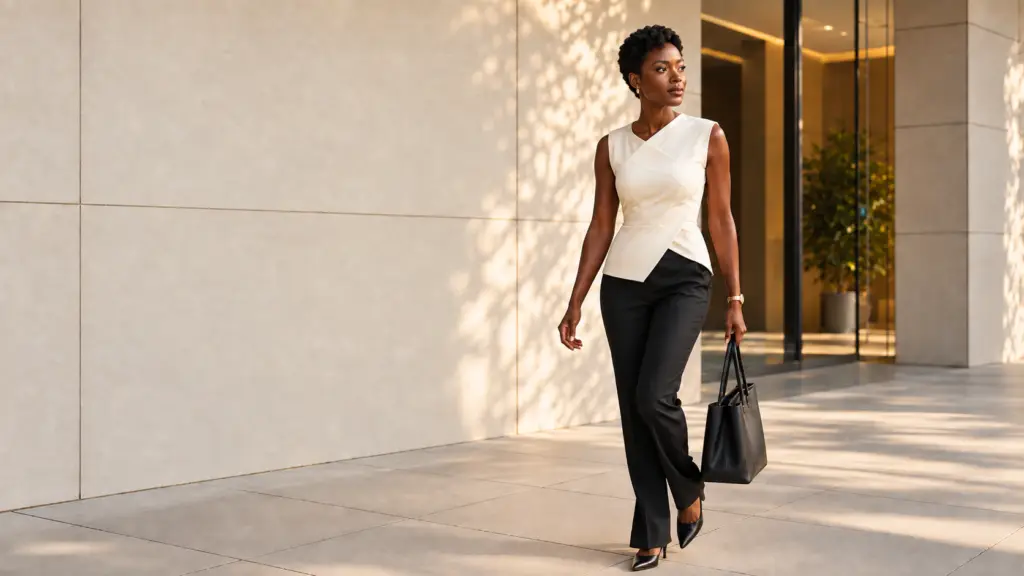
Sleeveless shell + wide-leg trouser + slingback
A high neckline, close armhole, and substantial fabric make bare arms feel deliberate—not unfinished.
Go deeper: Read the guide to how to style sleeveless tops for work.
Midi dress + refined layer + polished flat
One garment removes the matching problem. A shaped cardigan, soft blazer, or scarf changes the level without changing the dress.
Move the dial: Switch from soft tote to structured bag.
Want the pieces, not just the formula? Use LTK for styled outfit posts and ShopMy for the edited individual pieces. If you are still building the foundation, start with our workwear stores guide by budget before you buy.
Is it business casual? It depends.
The item is rarely the whole answer. Policy, fabric, condition, styling, and the rest of the outfit decide how it reads.
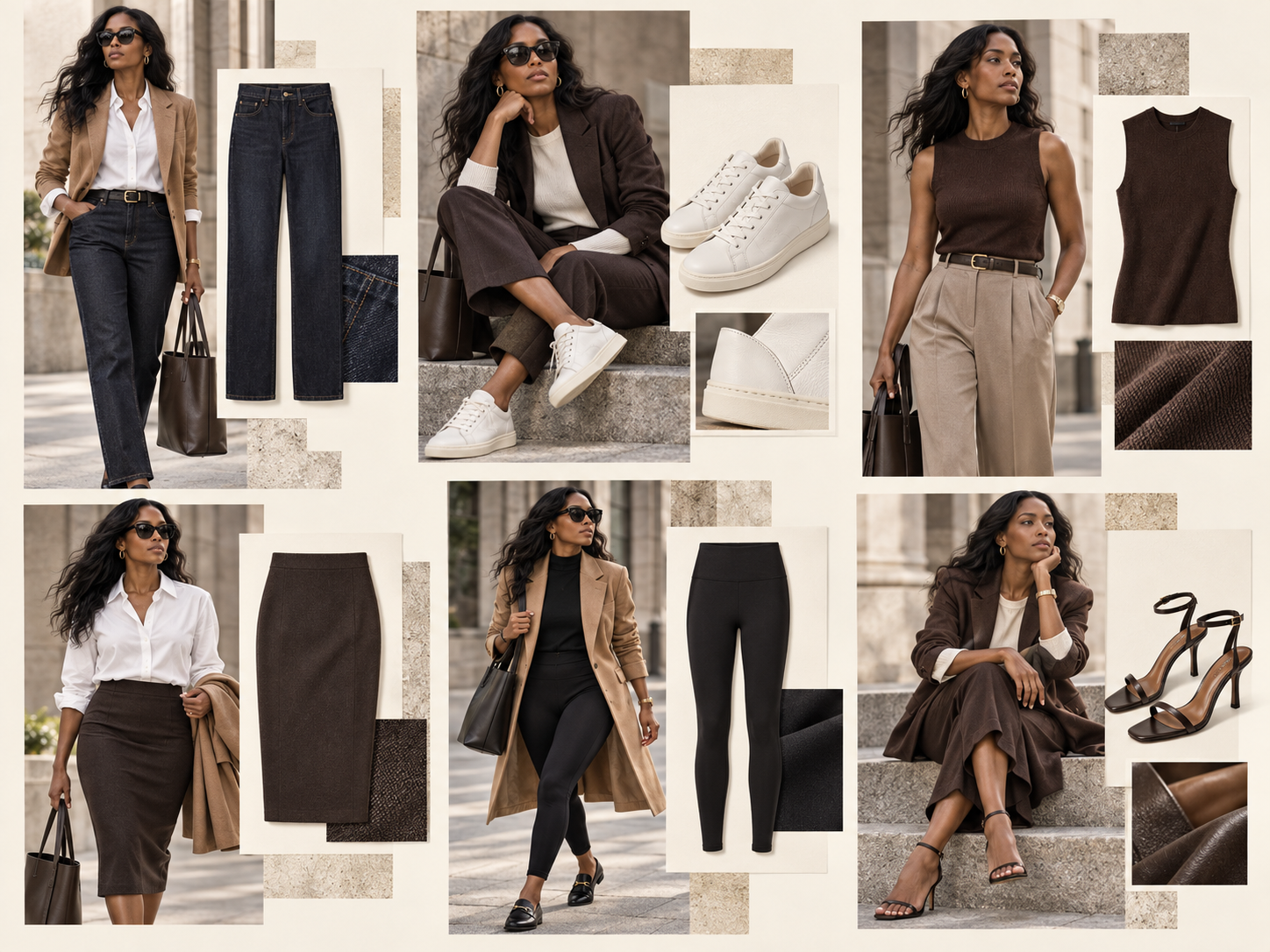
Jeans
Denim is allowed; the pair is clean and intentional; a refined top, shoe, or jacket anchors it.
You are interviewing, meeting a conservative client, or the policy says no denim. Distressing is a separate signal from denim itself.
Sneakers
The office norm supports them and the pair is clean, minimal, and clearly part of the outfit—not the gym bag.
Footwear is safety-regulated, the event is formal, or the room consistently signals traditional business dress.
Sleeveless tops
The neckline, armhole, opacity, and fabric all feel finished. A jacket nearby can cover changing room temperatures and formality.
The garment only looks work-appropriate while covered, or the written policy requires sleeves for safety or uniformity.
Pencil skirts
You can sit, walk, and move comfortably; the fabric is substantial; the full outfit feels balanced and intentional.
You are changing your body rather than evaluating the garment. Curves do not make a professional piece unprofessional.
Leggings
Your workplace is genuinely casual, the fabric is opaque and structured, and the styling reads as an intentional trouser alternative.
Athleisure is outside the dress code or you are dressing for a high-stakes, external-facing moment.
Open-toe shoes
The office and climate support them, the style is refined, and no safety or hygiene rule requires closed footwear.
You work around equipment, clinical areas, labs, kitchens, or any environment with a closed-toe requirement.
Professional is not the same as neutral.
Your body, hair texture, skin tone, and cultural expression do not become problems because someone else is unused to seeing them hold authority.
Black women are often asked to interpret vague standards while knowing those standards may not be applied evenly. That can make a simple dress code feel like reputation management. Use context strategically—but do not confuse strategy with shrinking.
Natural hair is not a lower setting on the professionalism dial. Neither are curves, color, a headwrap worn for religious or cultural reasons, or a strong sense of style. If the real issue is a colleague or manager making your appearance workplace business, read the day I stopped straightening my hair for important meetings and what to do when a manager comments on your hair.
Employers may generally set dress codes, but U.S. discrimination and accommodation rules can create important limits. The EEOC’s dress-code guidance explains protections tied to national origin, religion, and disability. This guide is practical information, not legal advice.
Your first-week plan.
Do not buy an imaginary office wardrobe before you have seen the real office. Start with what you own, collect evidence, and adjust deliberately. Once you know the actual gap, use our women’s workwear shopping guide by budget instead of panic-buying a whole new closet.
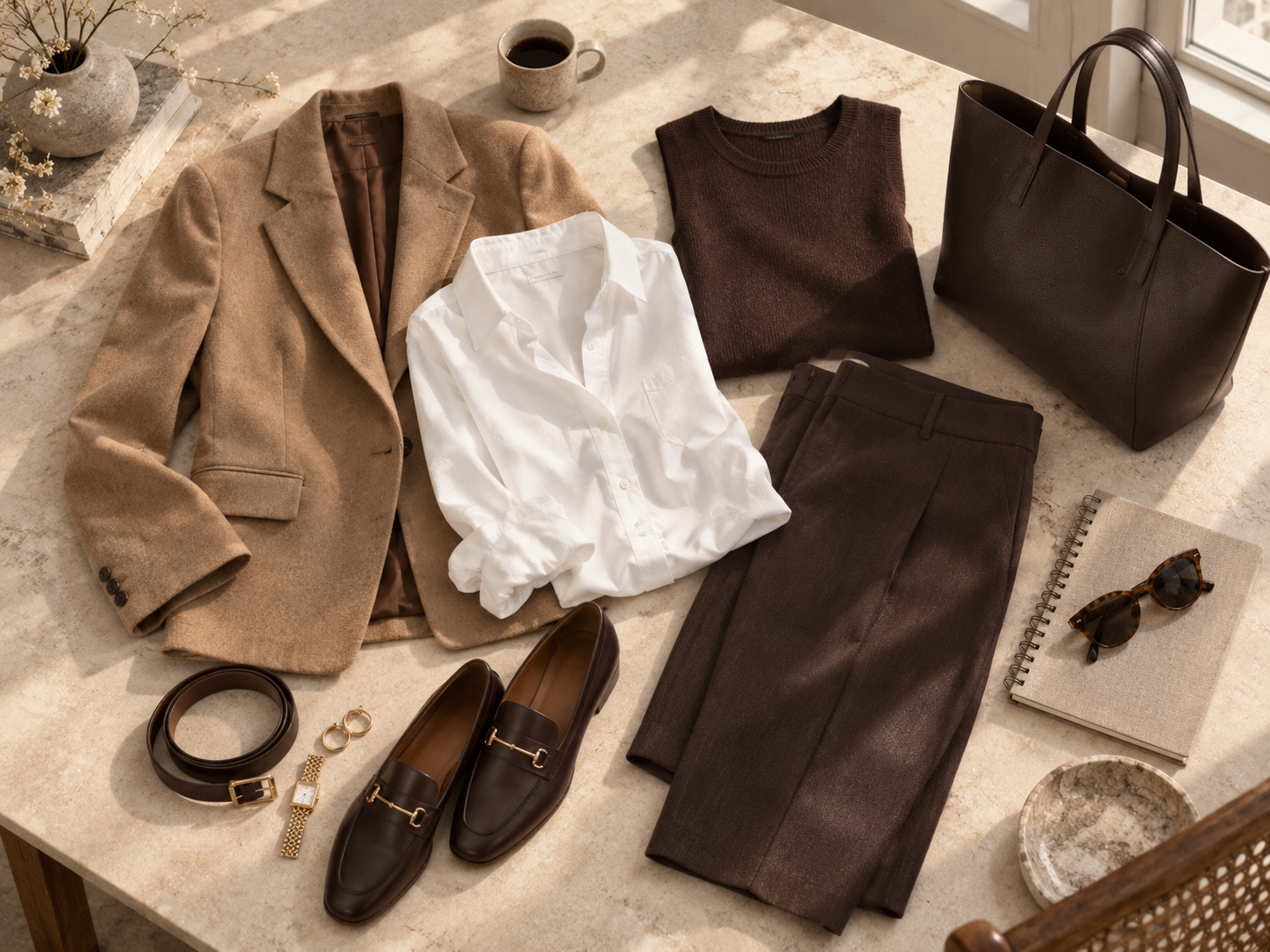
Ask once.
Check the handbook or send a simple question. If the answer is still “business casual,” choose a comfortable outfit one notch more intentional than your best guess.
Observe patterns.
Notice footwear, denim, sleeveless shapes, meeting days, senior-leader norms, and whether teams dress differently. Do not overreact to one unusually casual Friday.
Build your range.
Identify three repeatable formulas: everyday, elevated, and relaxed. Add only the gap that genuinely keeps one of those formulas from working.
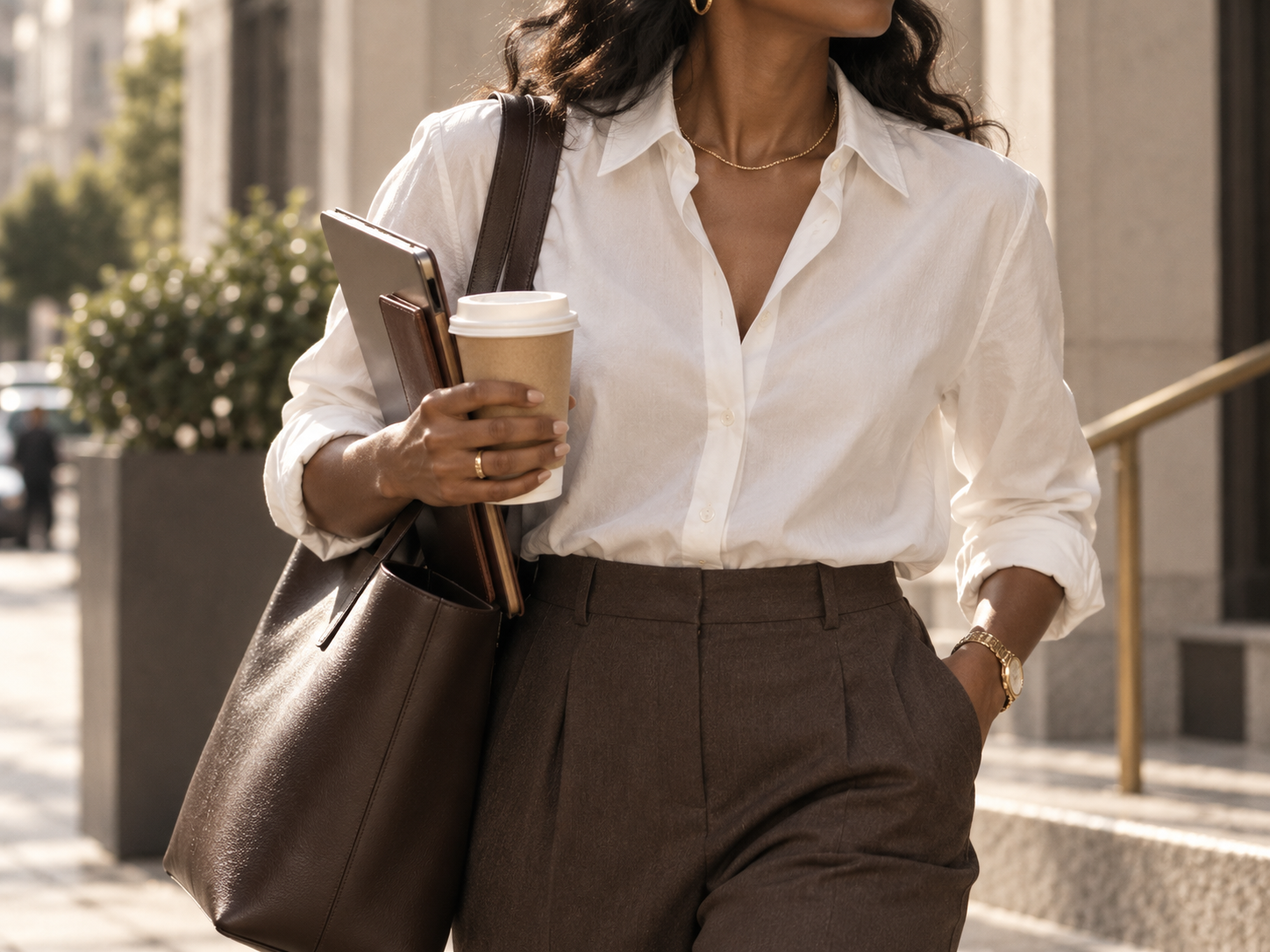
Buy the gap, not a whole new identity.
Start with three bottoms, four tops, two layers, and two pairs of shoes that can move up or down the dial. If you need the missing piece, browse The Corporate Curly’s edited workwear—not a wall of random basics.
Editor’s note: The shop may use affiliate links. The Corporate Curly may earn a commission if you buy through them, at no extra cost to you.
Still deciding what you actually need? Start with the workwear stores guide by budget. For seasonal outfit ideas, save the spring and summer capsule or read the fall and winter capsule guide.
Business casual FAQ.
The short version of the questions people search five minutes before leaving the house.
What is business casual for women?
Business casual is polished, work-appropriate clothing with less formality than a matching suit. Think coordinated separates, dresses, tailored or fluid trousers, skirts, refined knits and blouses, plus shoes that suit the setting. The exact mix depends on your employer and your agenda.
Can jeans be business casual?
Yes, when the employer permits denim. A clean, intentional pair is easier to integrate than ripped or heavily distressed denim. Pair it with a work signal—a structured top, jacket, polished shoe, or refined bag—and choose something else for a formal interview or conservative client unless you know denim is welcome.
Are sneakers business casual?
Clean, minimal sneakers are common in many modern offices, but they are not universal. Check the policy, the safety needs of your role, and what trusted colleagues wear. If the meeting is high-stakes and the culture is unclear, a loafer, flat, boot, or low heel is the safer one-notch move.
Are sleeveless tops business casual?
They can be. Look at the garment’s structure, opacity, neckline, and armhole—not simply whether it has sleeves. A tailored vest or substantial high-neck shell reads differently from an underlayer-weight tank. See our full guide to sleeveless office tops.
Is a pencil skirt professional on a curvy body?
Yes. A body does not make a professional garment inappropriate. Evaluate fit, fabric, movement, comfort, and the setting. Our guide to pencil skirts for curvy women at work separates practical fit questions from body policing.
What should I wear on my first day?
Choose something comfortable and one notch more intentional than your best estimate: tailored trousers or a polished skirt, a refined knit or blouse, and loafers, flats, boots, or a low heel. Bring a layer. Observe the office before buying more.
What is the difference between business casual and smart casual?
The terms overlap, but smart casual usually gives trend, personality, and relaxed pieces more room; business casual keeps a clearer office signal. Your employer may use the terms differently, so the written policy and lived norm still win.
Build the rest of the workweek.
Go from understanding the dress code to making the pieces in your closet do more.
What does “business casual” mean where you work?
Tell us your industry, city, and the one item your office cannot seem to agree on. Your answer may be exactly the context another reader needs.
Jeans? Sneakers? Sleeveless tops? Where does your office draw the line—and is it applied fairly?