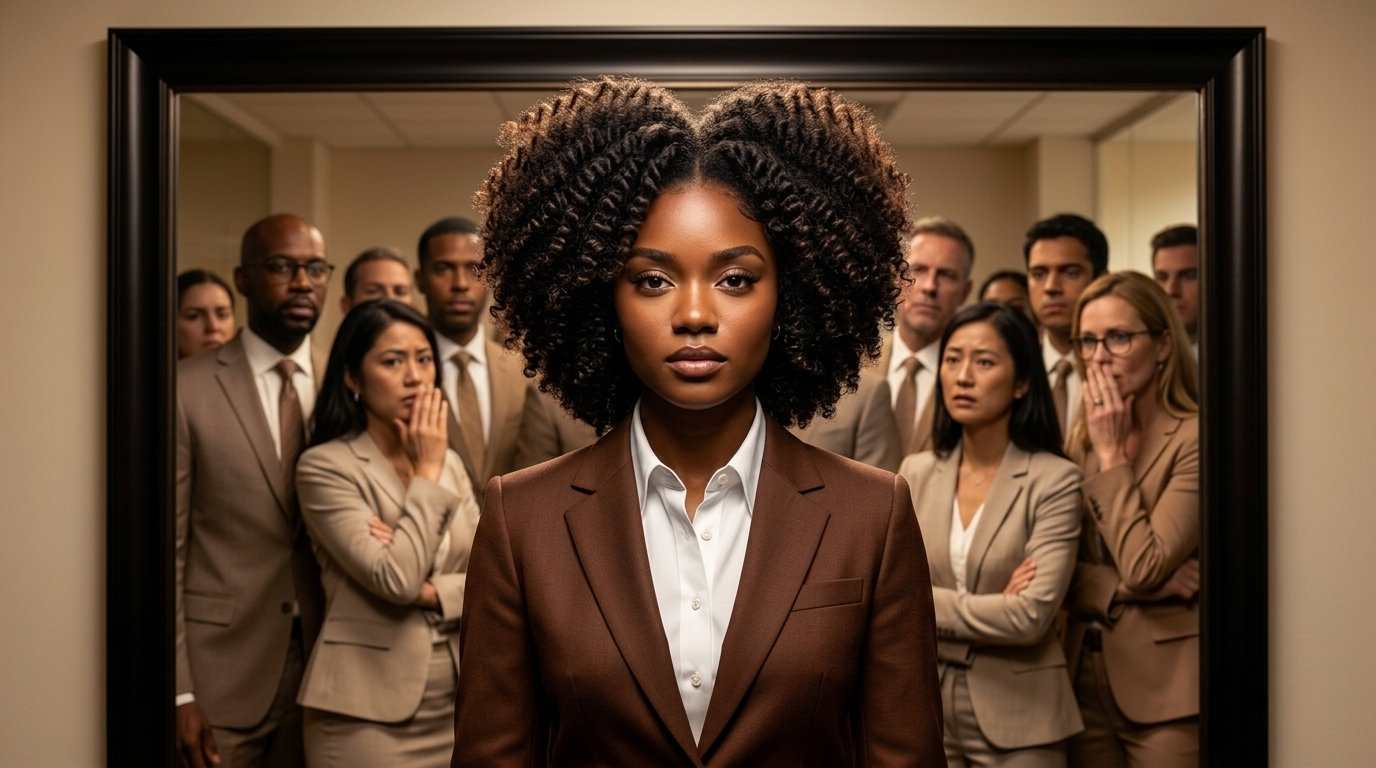
The Corporate Curly · A personal essay
Black Hair versus Corporate America
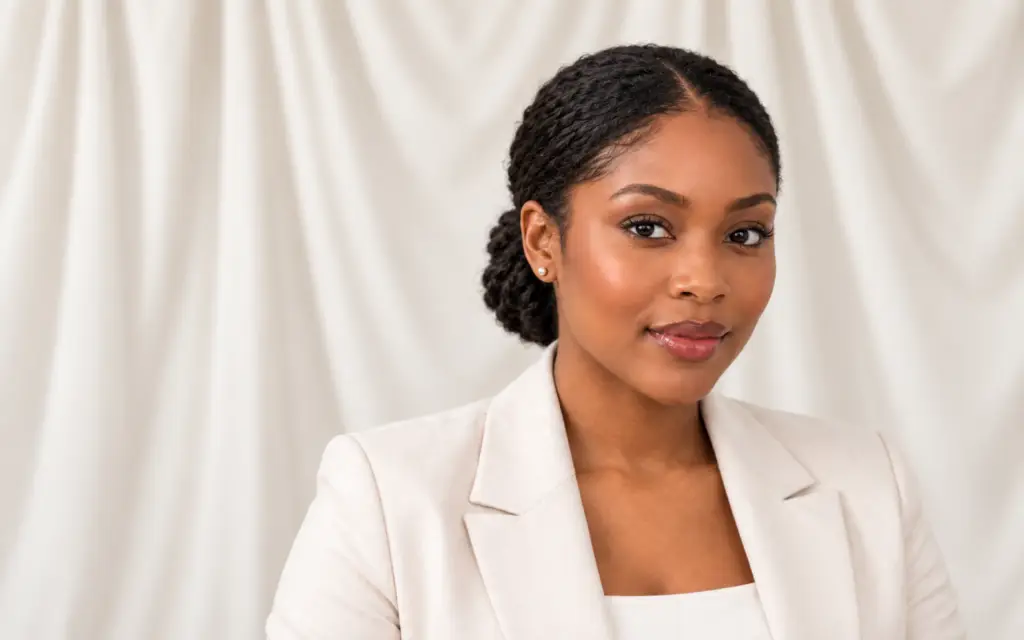
Our hair is beautiful. It is professional. Most days, it is not a big deal. Then there are the days it suddenly becomes one.
Sometimes I change my hair and become a stranger at my own job.
Same face. Same desk. Same woman. But I walk in with a different style and, for a second, people have to place me again.
There are usually a few responses. “How long did that take?” “I like that.” A curious look followed by a question that is trying to be polite. And sometimes someone walks right past me. Not intentionally. Not cruelly. My hair changed, and for one brief moment, they thought I was a different person.
I can laugh about it. Sometimes I do. But later, the moment stays with me. How can something I change so often make me look unfamiliar when nothing about who I am has changed?
Our hair is just hair—until it isn’t.
Black women know the exact moment it stops being a style and starts becoming a conversation. We feel the room lean toward us. We hear the extra note in “different.” We know when a compliment is simply a compliment, and we also know when we are being asked to explain ourselves again.
Most days, it really is not a big deal.
I do not want to turn every question into an attack. Sometimes a coworker likes my hair and says so. Sometimes the curiosity is clumsy but harmless. Sometimes we laugh because, yes, Black women can look completely different on Monday and still have the same badge photo.
Most days, I show up, do my work and go home. My hair does not derail the meeting. It does not weaken the idea. It does not change my judgment, my preparation or the value I bring into the room. The office keeps moving because my hair was never the thing holding it together.
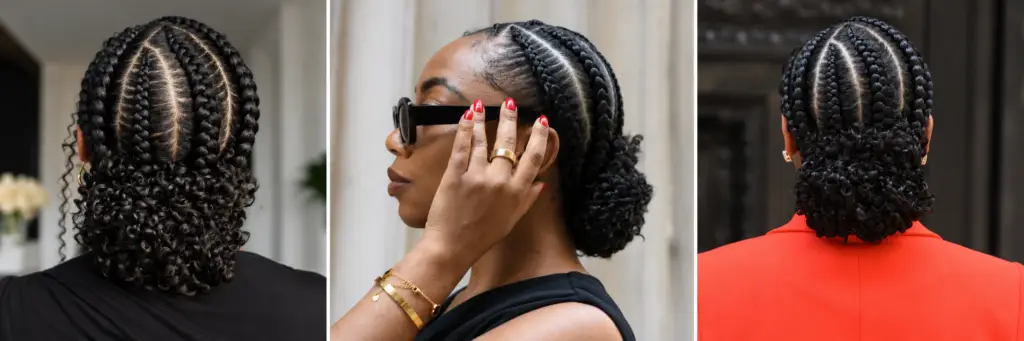
This matters because fear does not deserve to tell the whole story. Natural hair is not waiting to become professional. It is professional because we are professionals. The Afro is professional. The twist-out is professional. The puff, the locs, the wash-and-go and the 4C coils that refused every plan you made the night before are professional.
Our hair does not earn that word by becoming straighter, smaller or easier for someone else to understand.
Sometimes “be careful” was another way of saying “I love you.”
For many of us, our first lessons about hair came from women who loved us. We sat between knees. We learned the pull of a comb, the relief of the finished braid and the satin scarf tied before bed. Care lived in those hands. So did caution.
Pull it back. Smooth your edges. Nothing too loud for the interview. Do not give them a reason.
Those words can make us feel as if something natural about us needs to be corrected. But I wonder how often the women saying them were passing down fear they had learned the hard way. Maybe they were not ashamed of our hair. Maybe they remembered a room that punished them. Maybe neatness became armor, and they wanted to make sure we never entered battle uncovered.
Love can carry fear without meaning to. We can honor the women who tried to protect us and still put down the parts of that protection that made us smaller. We can say, “I know why you taught me this,” and choose not to teach the same fear to ourselves every morning.
And then there are the days it is a big deal.
There is a difference between a coworker saying, “I love your braids,” and a manager saying they are not appropriate for clients. There is a difference between innocent curiosity and a hand reaching toward your head after you have already moved away. There is a difference between feeling noticed and realizing your hair may be affecting how your work is judged.
Sometimes the language is polished: executive presence, clean, distracting, professional. Nobody says “less Black.” They do not have to. You hear the rest of the sentence on your own.
This is where the CROWN Act enters the conversation. CROWN stands for Creating a Respectful and Open World for Natural Hair. It is designed to prohibit race-based hair discrimination, including discrimination tied to hair texture and protective styles such as braids, locs, twists and Bantu knots. Protections vary by location, so the law is not the same everywhere—but the principle is simple: our hair should not cost us access to work or school.
Not every awkward comment is discrimination. But when hair begins to shape hiring, assignments, evaluations, discipline or whether we are considered “client-ready,” it is no longer just a comment. The official CROWN Act campaign explains current protections, and the EEOC explains how federal race-discrimination law can apply to characteristics associated with race, including hair texture.
If a manager has crossed that line, our guide to responding to comments about your hair gives you calm words for the moment and a record to create afterward.
CROWN’s 2023 workplace research found that roughly two-thirds of Black women change their hair for a job interview, and that Black women with coily or textured hair are twice as likely to experience workplace microaggressions as Black women with straighter hair.
Source: 2023 CROWN Workplace Research Study. Laws and individual situations vary; this article is general information, not legal advice. If hair bias has turned into discipline or job loss, start with what to document and do next.I want to change my hair without it changing the way you see me.
Same woman. Same mind. Same work. The style may change between Friday and Monday. Your confidence in me should not.
Natural hair is beautiful. Natural hair is professional.
That is the starting point at The Corporate Curly. The Hair Desk exists for everything that comes after: the real mornings, the workplace questions, the style ideas, the care routines and the moments when you need to know what to say next.
Most days, your hair will not be a problem. You do not have to make it one first.
I do not want us to walk into every office expecting harm. There are rooms where nobody cares. There are managers who understand. There are coworkers who say, “Your hair looks nice,” and move on. There are Black women wearing Afros, locs, braids, wigs, presses and wash-and-gos while being hired, promoted and trusted.
Ease is possible. We deserve to expect some of it.
But if a room does make your hair a problem, you are not too sensitive for noticing. You are not unprofessional for setting a boundary. You are not difficult for asking that the same standard be applied fairly. You do not have to carry the whole history of Black hair into the conversation, but you are allowed to know that history is standing behind you.
Wear the style that helps you feel like yourself. Or wear the one that simply gets you through the week. Let the compliment be a compliment when it is one. Let the strange moment pass when you want it to. Speak when you need to. Document what matters. Ask for help before you convince yourself you should handle it alone.
Our hair is just hair until it is not. And when it is not, we should know what to call it, where to go and that we are not the only ones who felt the room change.
Our hair belongs here.
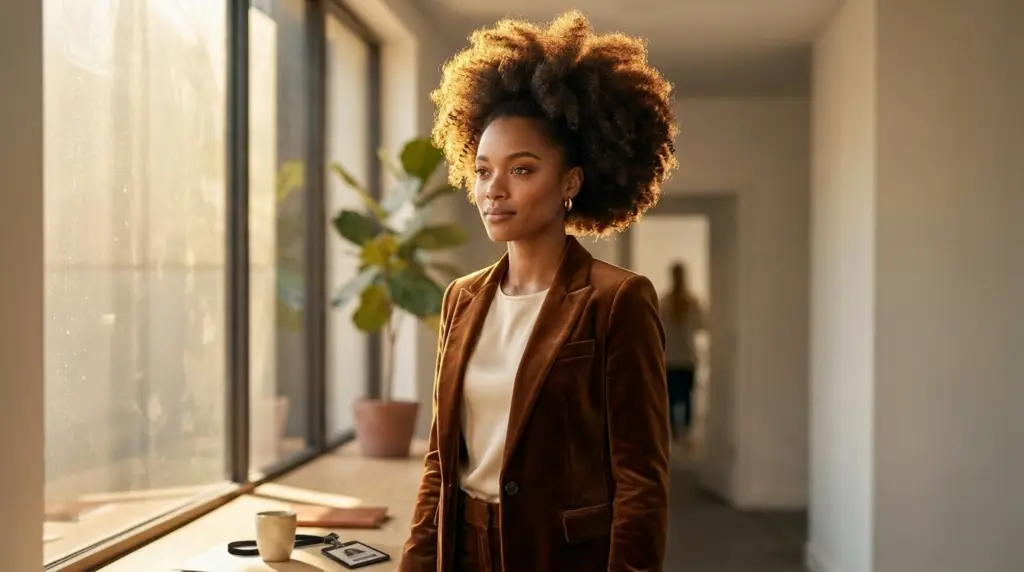
It belongs in the interview, the 9:00, the client call and the chair at the head of the table. It belongs there freshly done, three weeks into the style, stretched by the weather or pulled into the quickest puff we could manage.
Our natural hair is beautiful. Our natural hair is professional. That does not become less true because one person failed to understand it.
We do not have to be brave every time we wear it. We do not have to turn every style into a statement. We can simply be Black women doing our work, changing our hair and remaining exactly who we were before anyone looked twice.
Most days, it will not be a big deal. When it is, we will know what to call it, where to turn and that we are not alone.
Whatever room you walk into tomorrow, remember: your hair does not need to be explained before you can be respected.
Sources and resources
For the woman standing in front of the mirror, wondering if she should make herself smaller.
Send her this—not because she needs permission, but because sometimes we need another Black woman to remind us that we already belong.