
Braids belong in every room.
The complete guide to choosing, caring for, styling, and wearing braids at work—plus exactly what to say when someone decides your hair is workplace business.
Your hair does not need to become smaller for your work to look serious.
Yes. Full stop.
Knotless, cornrows, a bob, a ponytail, a bun, or waist-length braids can all belong at work.
Pain, stinging, scalp tenting, or a headache is not the price of a “neat” install.
Secure length around equipment, food, clinical care, or required protective gear.
Braids are not “professional when styled correctly.” Braids are professional because they are hair.
Your useful questions are simpler: Does the style feel good? Can you work safely? Does it fit your actual week? Choose how you want to show up; do not confuse that personal strategy with making braids acceptable to someone else.
If the issue is something a manager or colleague said, go directly to Hair at Work for response language and documentation steps.
The goal is not to make braids look corporate. It is to make the workweek work for the woman wearing them.
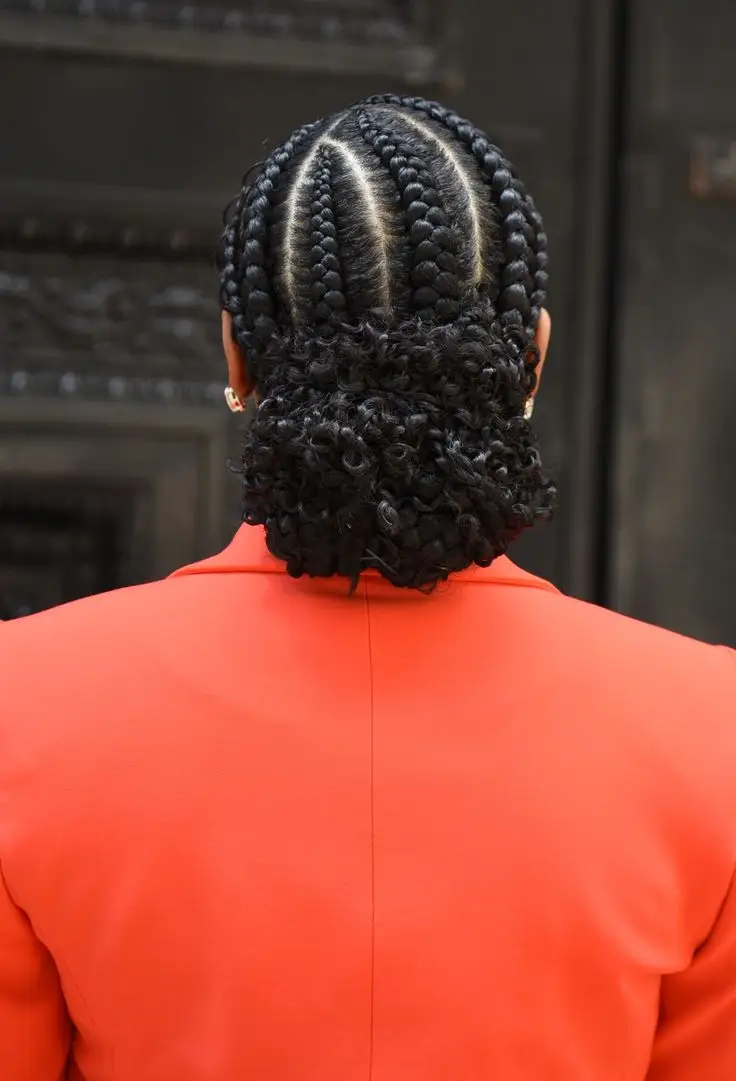
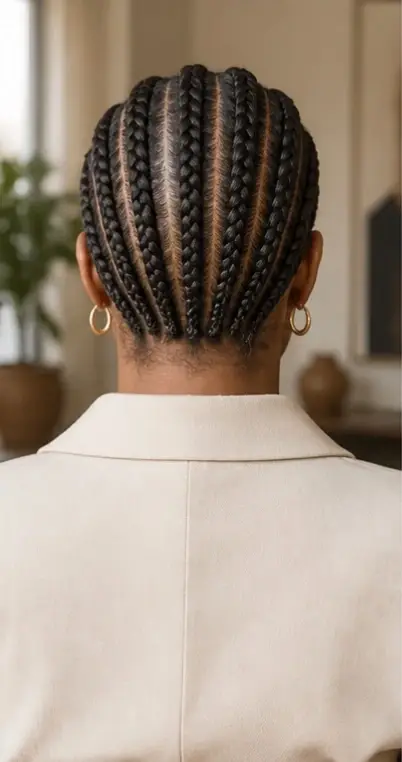
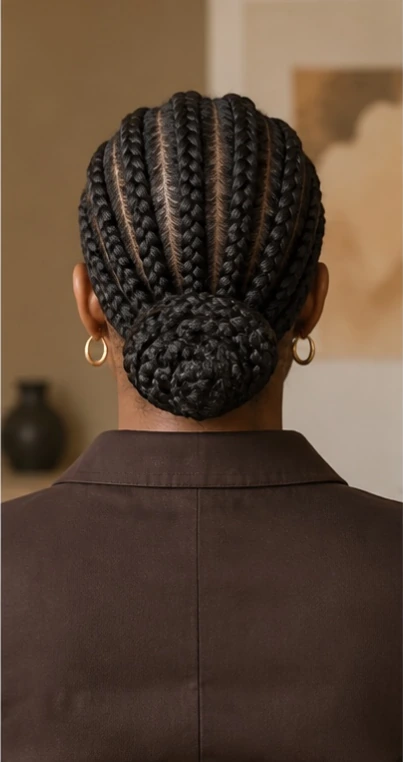
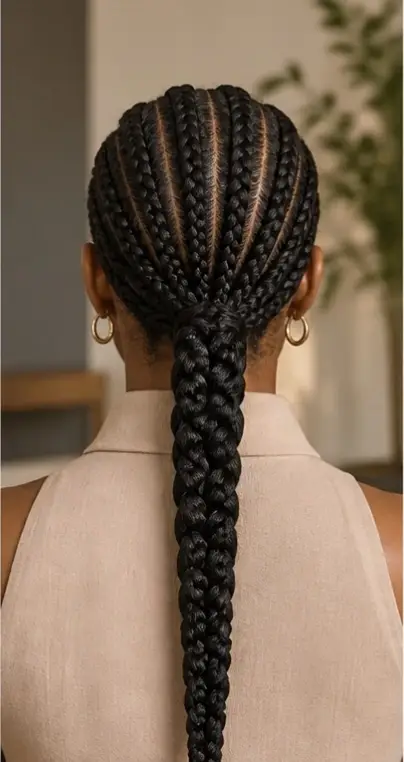
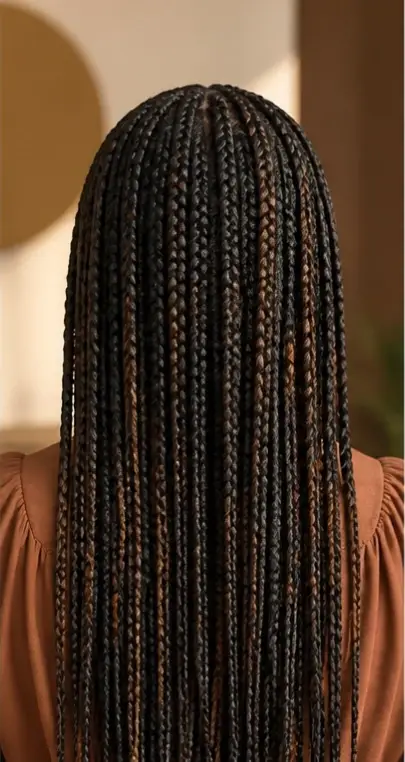
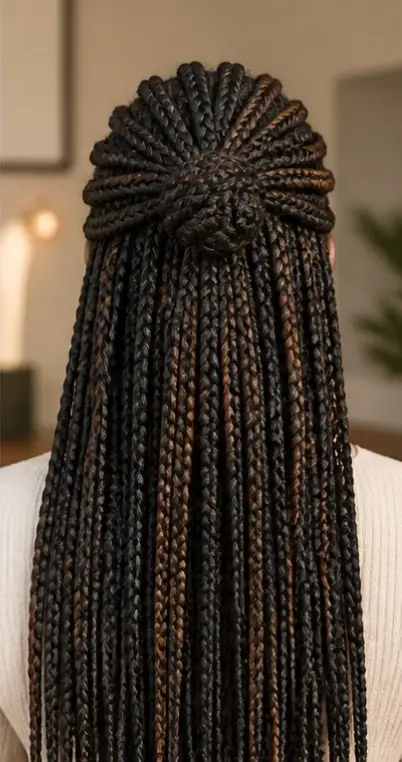
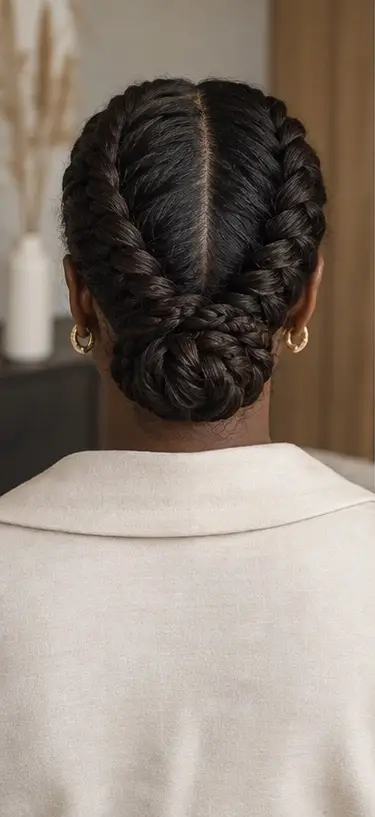
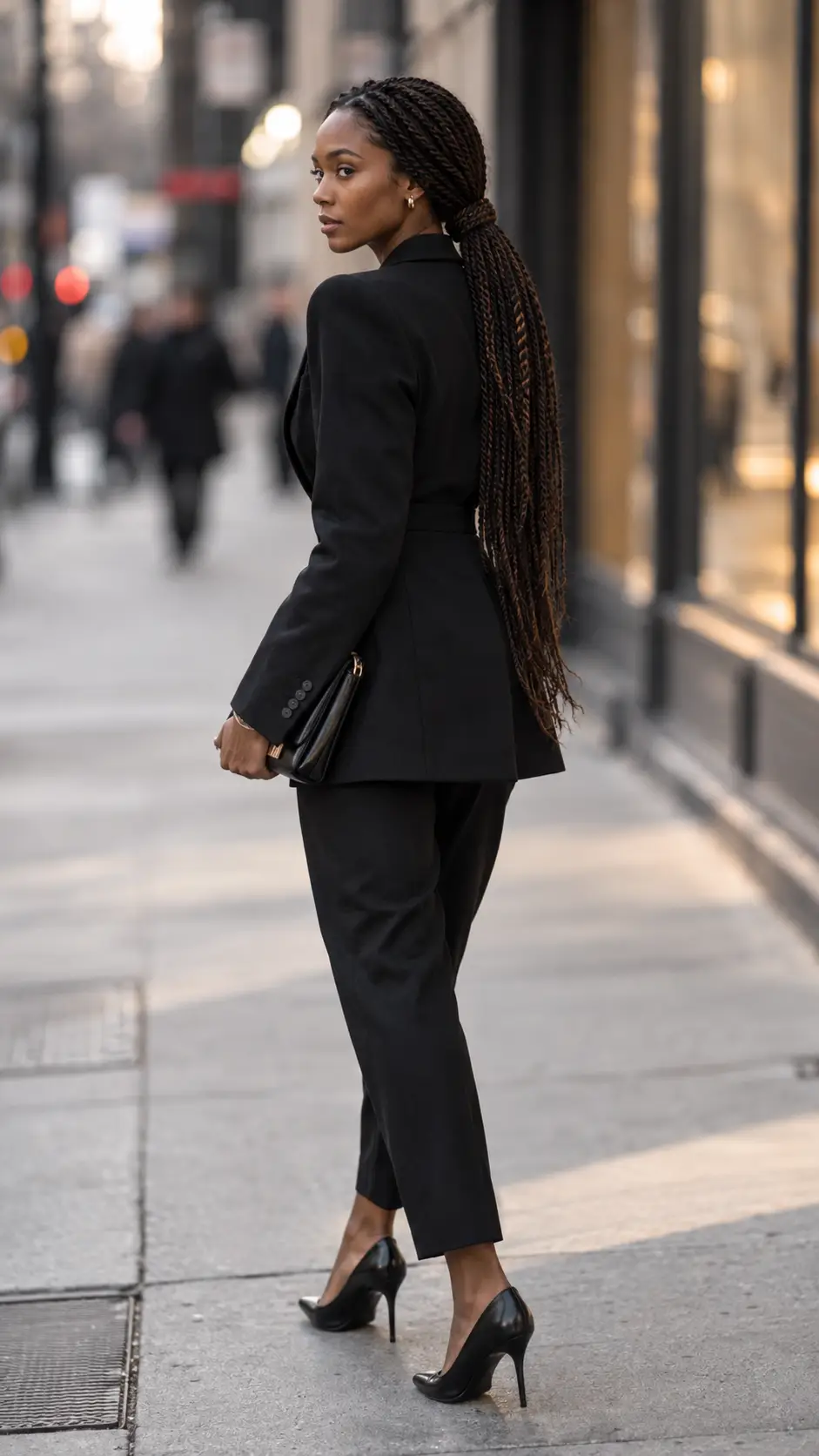
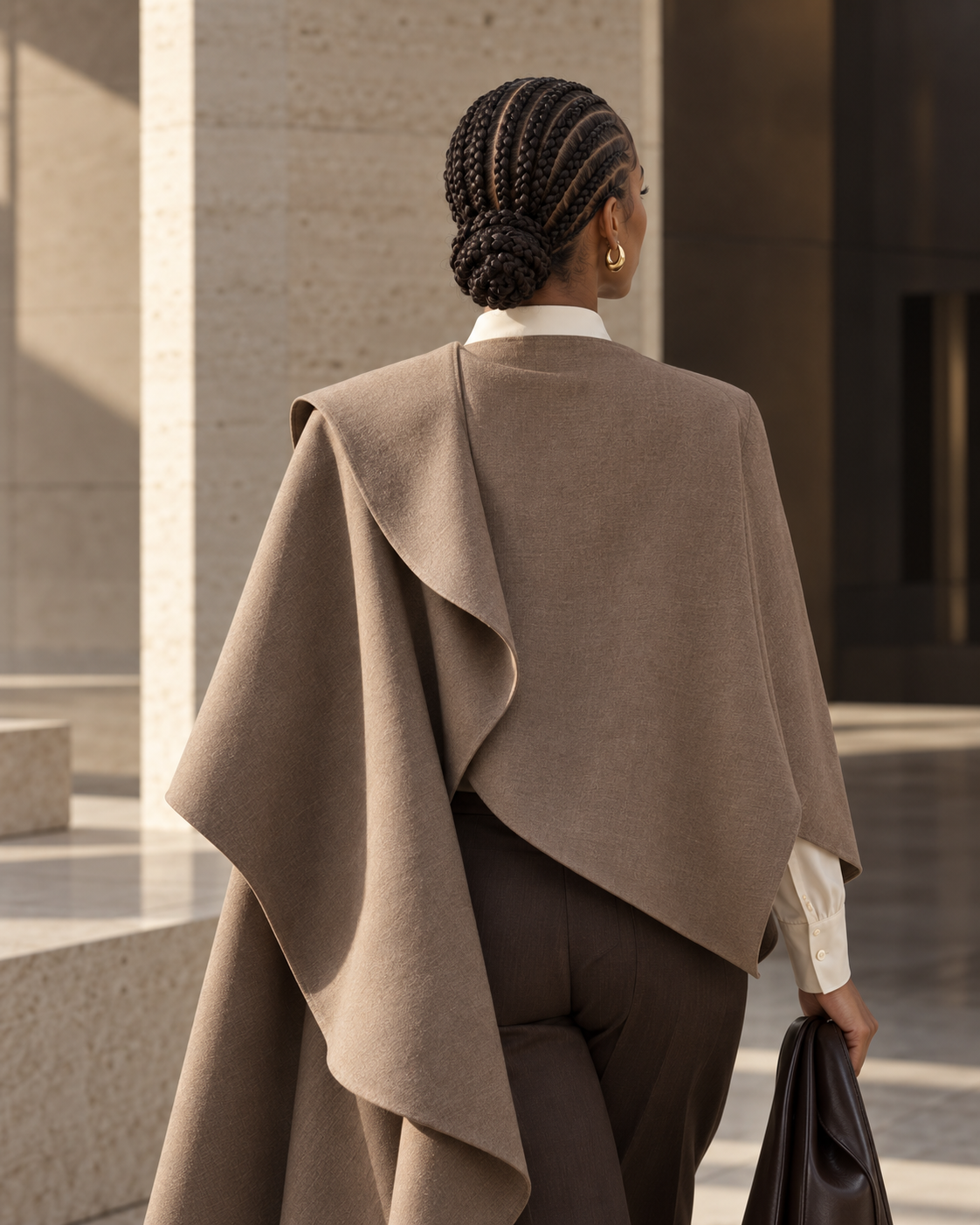
The back view. Ten braid ideas.
The exact shape your stylist needs to see. These looks now show the full braid silhouette, so you can compare length, shape, and finish without awkward cropping.
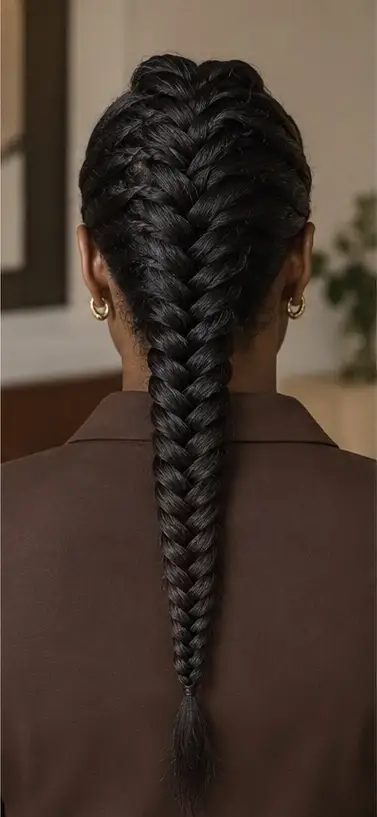
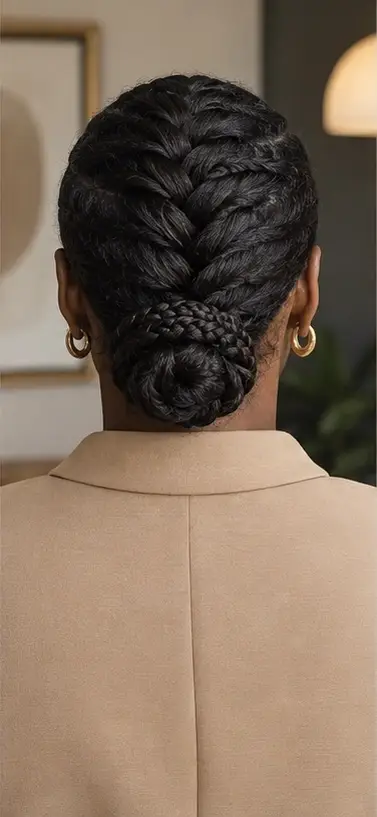
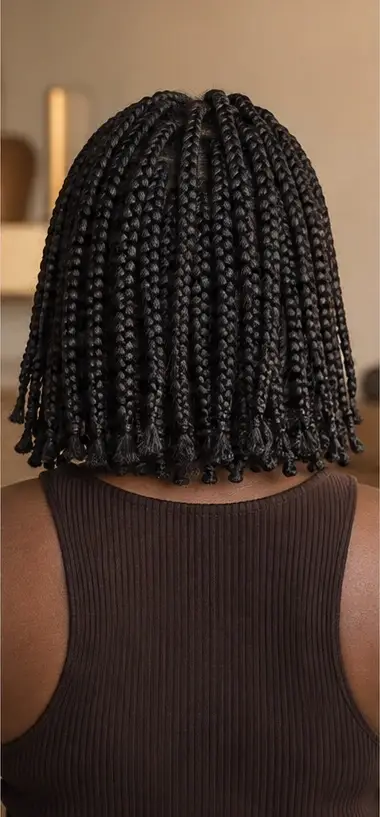
Make Monday's hair decision before Monday.
Get one useful hairstyle, braid-care tip, or workplace script in your inbox. Practical, edited, and built for the workweek.
No inbox clutter. Just the useful part of the workweek.
Four styles. See the difference.
Compare weight, movement, scalp access, and the amount of daily styling each shape asks of you.
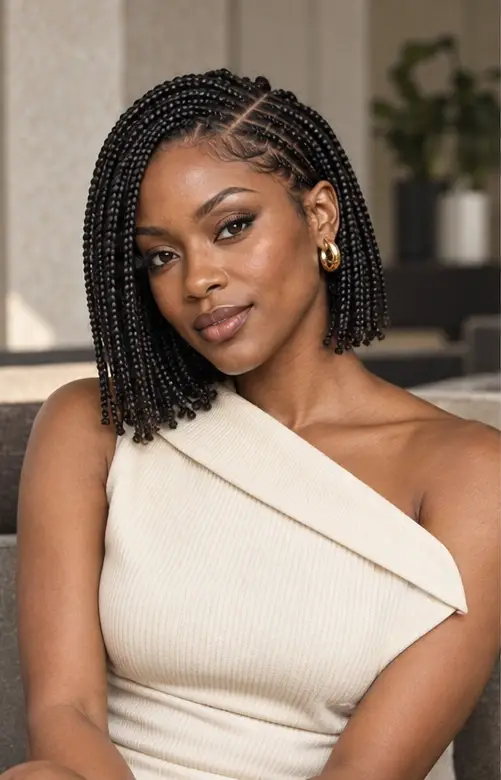
The braid bob
- Best for
- Travel, heat, active days
- Try
- Side part or tucked back
- Watch
- Ends that irritate the neck
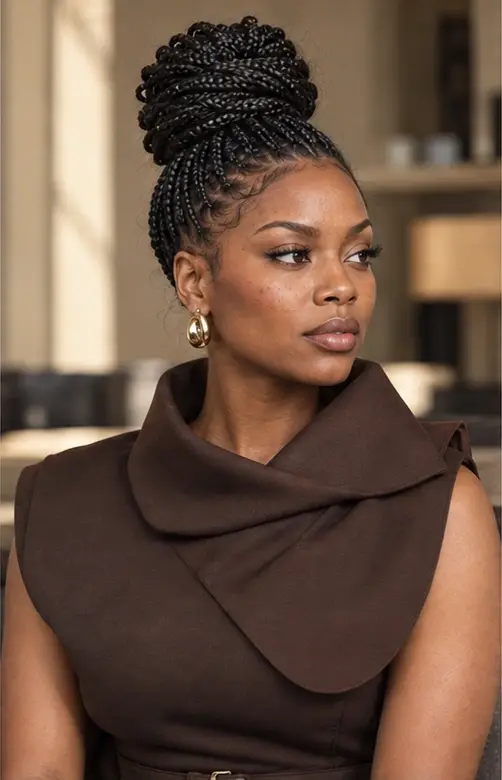
The braided bun
- Best for
- Speaking and long days
- Try
- Soft base, secure pins
- Watch
- Heavy or tight topknots
The cornrow ponytail
- Best for
- Uniformed or active roles
- Try
- Low gather or loose tail
- Watch
- Hairline tension and gear friction
The long half-up set
- Best for
- Changing meeting schedules
- Try
- Down, half-up, or low
- Watch
- Added weight and edge tension
“Polished” should describe the work.
Judge the style by safety, comfort, and function—not proximity to straight hair.
Safe for the role?
Secure length around equipment, food, patients, machinery, or required gear.
Comfortable all day?
No pain, pulling, headache, or constant readjustment.
Cared for on your terms?
A calm scalp and the condition you want—not an invented standard.
Supporting the day?
Choose a shape that lets you focus on the room, not monitor your hair.
Wear the style. Read the setting.
Adjusting a silhouette can be useful. It does not mean the unadjusted version is unprofessional.
Let the braids be the style.
Down, side-parted, or half-up—choose what survives the commute.
Keep a snag-free tie at your desk.Choose familiarity over fear.
You can interview in braids. Gather them only if movement distracts you.
Test the full look on video and seated.Decide before the nerves.
Choose down, back, or up the night before—then focus on the ask.
A soft low gather photographs cleanly.Secure for function.
Follow legitimate safety rules and confirm that required gear fits.
Bring the gear to your style consultation.Your braid length can change for the task without becoming a referendum on whether braids belong there.
A full workweek starts with a calm scalp.
Protective styling should protect. Speak up early and keep the routine simple.
Open the Hair Health DirectoryStart clean and name sensitive areas.
Choose size and length with your scalp—not only the reference photo—in mind.
Say “looser” at the first pull.
Ask immediately for less tension around the hairline or fragile areas.
Clean the scalp; reduce friction.
Use a repeatable cleansing routine and a satin or silk covering that contains the length comfortably.
Take down slowly.
Detangle gently, cleanse, condition, and give your scalp recovery time.
Health context: The American Academy of Dermatology warns that repeated pulling from tight styles can cause traction alopecia. Persistent pain, thinning, bumps, or hair loss deserves evaluation by a board-certified dermatologist.
Four products. Four jobs.
Buy by function: cleanse, soothe, finish, protect. No product can fix an install that is too tight.
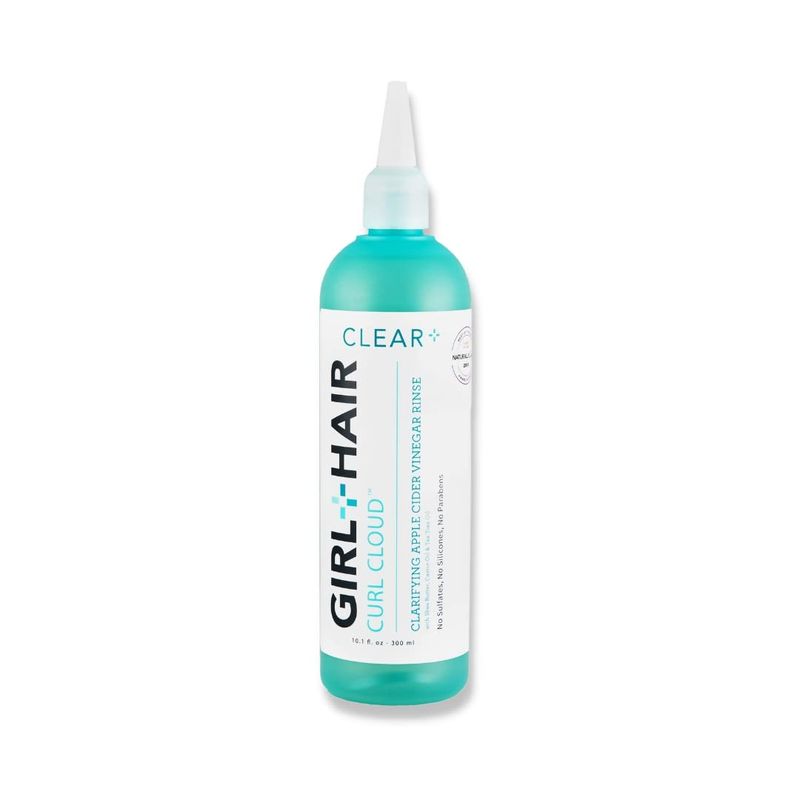
Girl+Hair CLEAR+ Rinse
A pointed nozzle helps place clarifying rinse between braid rows when buildup—not dryness—is the issue.
View the rinse →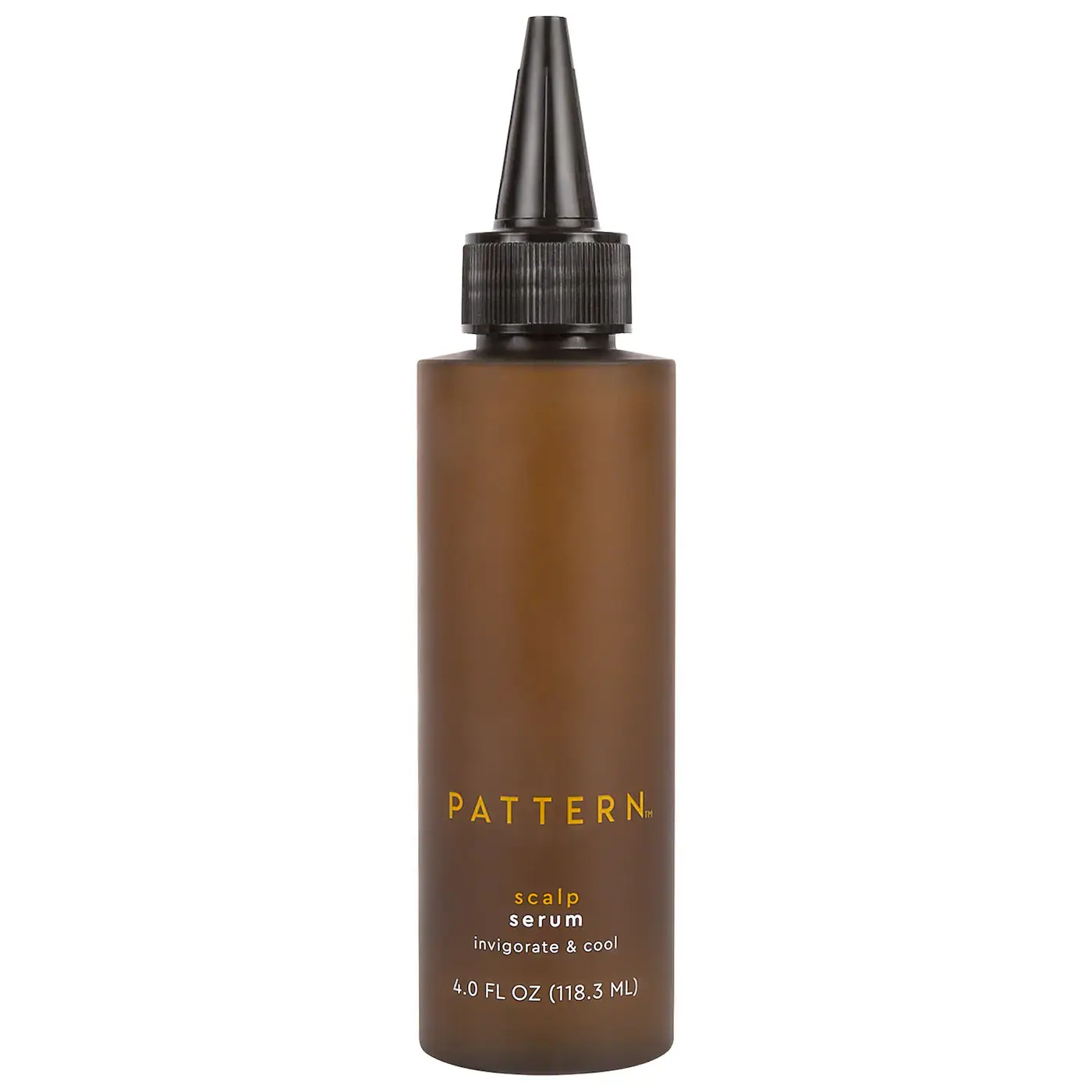
Pattern Scalp Serum
A lightweight, targeted option for a dry-feeling scalp. Do not use soothing product to mask pain from tension.
View the serum →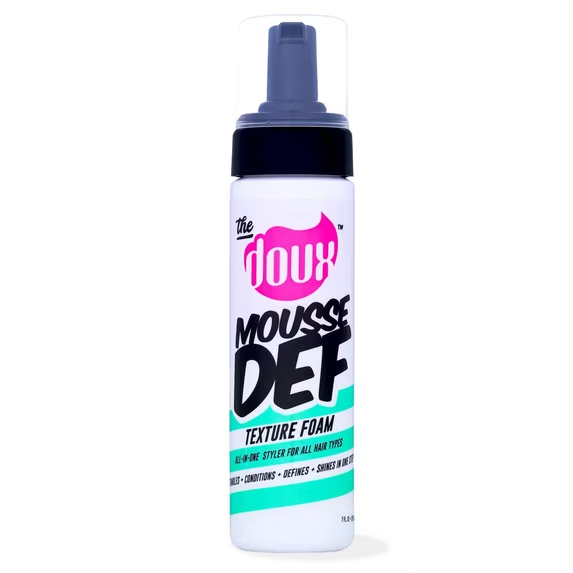
The Doux Mousse Def
Use a small amount on the braided lengths to refresh a fuzzy finish, then let the style dry before wrapping.
View the foam →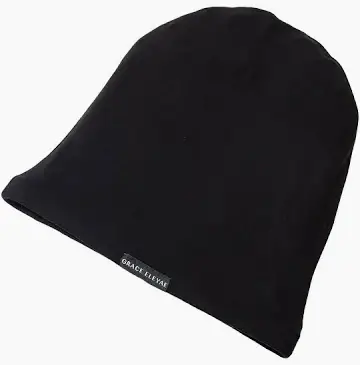
Grace Eleyae Satin-Lined Cap
A friction-reducing night layer that stays simple. Choose a size that holds the braid length without pressure.
View the cap →Editor’s note: Prices and availability change. Start with the one job your routine is missing; you do not need all four. The ShopMy edit may use affiliate links, which can earn The Corporate Curly a commission at no extra cost to you.
Shop the full Hair DeskChange the placement, not the standard.
Down, low, or up. Decide once, then get back to the work.

Give the moment one clean sentence.
Redirect, set a boundary, or document. Choose based on the pattern and what you want.
“Your hair is so different!”
“I switch it up. Anyway—where did we land on the timeline?”
“How long did that take?”
“Long enough that I’m glad it lasts. What did you need from me on the deck?”
Someone reaches for or touches your braids.
“Please don’t touch my hair.”
“Are those client appropriate?”
“Can you show me the written standard and explain which job requirement my hairstyle affects?”
A braid comment appears in a review.
“What observable behavior or work outcome needs to change, and is the same written standard applied across the team?”
Braids are named in many hair-discrimination laws.
CROWN Act protections commonly address race-based discrimination involving hair texture and protective styles. Coverage varies by location.
If a hair comment affects hiring, client access, discipline, or performance, document the exact words and ask for the policy in writing.
The Corporate Curly provides general information, not legal advice. Laws and deadlines change; verify the rules for your location and situation.
Hair, work, and what happens next.
Move from inspiration to the exact resource your situation needs.


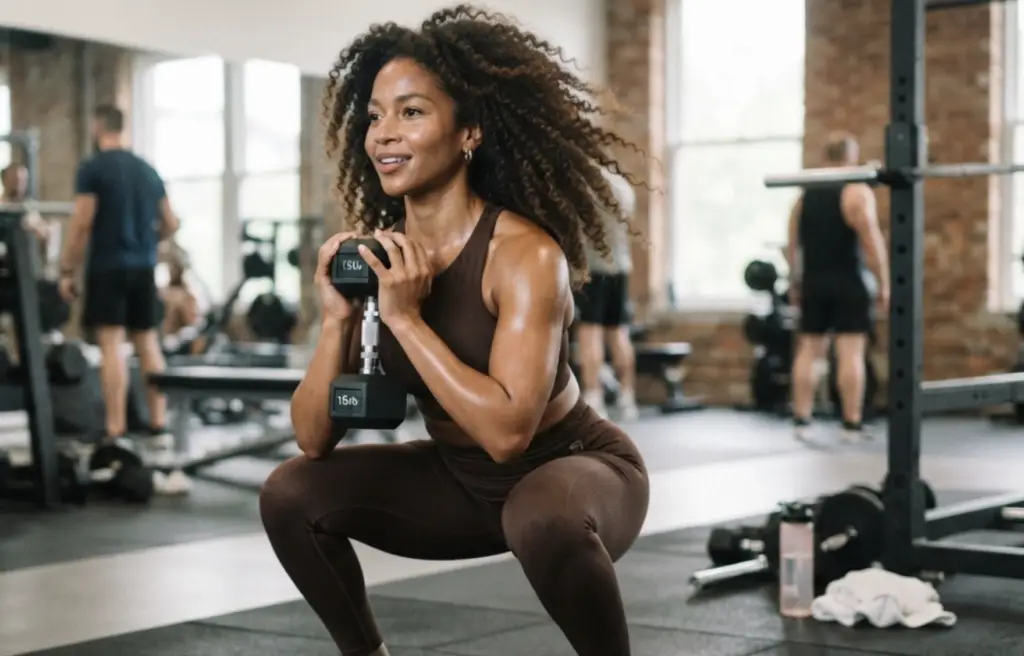
What is your best braid-at-work lesson?
Share the style that makes your week easier, the care step you learned the hard way, or the boundary you wish you had used sooner. Leave out employer names and confidential details.
Which braid style works best for your schedule—and has anyone ever made it workplace business?