
The day I stopped straightening my hair for important client meetings.
I had confused a silk press with being prepared. The day I separated the two, I walked into the room with more time, more focus—and all of myself.


The meeting was important. My hair was already ready.
The night before a high-stakes client presentation, I opened the weather app before I opened the deck. Humidity: high. My first thought was not about the numbers, the room or the recommendation. It was, “What am I going to do with my hair?”
For years, “important meeting” had triggered the same private checklist: confirm the agenda, rehearse the opening, straighten my hair. The first two items sharpened the work. The third was supposed to make the work easier for other people to receive.
I never called it fear. I called it polish. I called it client-ready. I called it removing distractions. But there was always a quiet bargain underneath: if I made my hair familiar enough, perhaps no one would use it to misread the rest of me.
I was spending the evening managing an imagined reaction instead of strengthening the argument I had been hired to make.
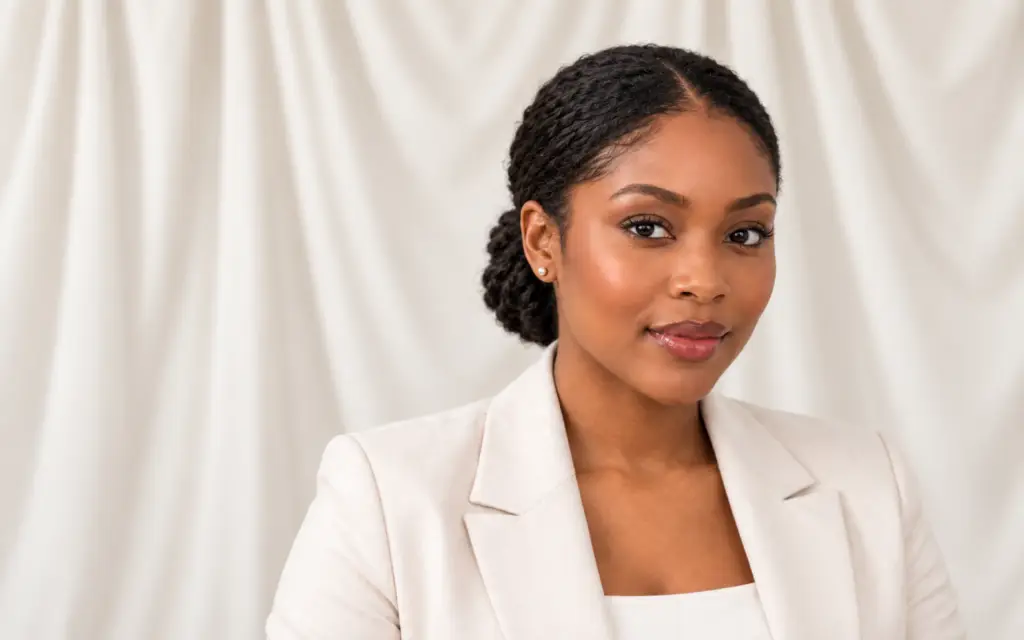
That night, I left the flat iron in the drawer. I refreshed my curls, shaped them, wrapped them and returned to the presentation. It did not feel like a grand declaration. It felt practical. I wanted the hour back.
I did not become less prepared. I stopped making my texture do extra work.
What I thought straight hair was doing for me.
Straight hair had become a form of risk management. It let me imagine that I had controlled one more variable before entering a room where I might already be the only Black woman, the youngest person or the person expected to prove the recommendation twice.
There is nothing wrong with a silk press. I still love the movement, the part and the ease of wrapping it at night. The problem was not the style. The problem was the rule I had quietly built around it: natural for ordinary days, straight for consequential ones.
That rule was teaching me something I did not believe—that my natural texture and my highest level of authority should not appear together.
I separated preference from pressure.
I could straighten my hair because I wanted the style without pretending it was required for credibility.
I redefined “prepared.”
Prepared meant knowing the client’s problem, anticipating the objection and making the next decision easy.
I planned for my real hair.
I chose styles for the weather, travel and meeting schedule—not for an imagined hierarchy of professionalism.
If “polished,” “executive” or “client-facing” have started to feel like coded instructions, The Corporate Curly’s Hair at Work guide helps separate actionable feedback from somebody else’s aesthetic preference.

Then the meeting became about the meeting.
No one paused when I entered. No one forgot the agenda. The client asked difficult questions, we worked through the tradeoffs, and the presentation moved forward. My hair did not derail the recommendation. It did not weaken the numbers. It did not make my answer less precise.
The most noticeable change was internal. I was no longer monitoring whether the room had noticed me. I was listening more closely. I answered without rushing. I occupied the pauses instead of filling them. The energy I had once spent pre-editing my appearance was available for the work.
One successful meeting did not erase years of bias, and it did not guarantee every room would respond the same way. Black women are not imagining the professional penalties attached to hair. But I could hold two truths at once: the bias can be real, and I did not have to enforce it against myself before anyone else had the chance.
Make the decision before the nerves arrive.
Read the week.
Check weather, travel, camera time and the days the style needs to last. Choose for logistics, not respectability.
Prepare once.
Set the style, pack a small refresh kit and stop touching it. Move your attention to the opening and the ask.
Name your job.
Your job is to clarify the problem, make the recommendation and lead the next decision. Enter on that assignment.
Your hair does not need a defense. You may need a sentence.
A client or manager may still describe natural hair as “distracting,” “not polished” or “not appropriate for this audience.” You do not have to debate your appearance in real time. Ask for the standard, keep the conversation factual and create a record.
The goal is not to deliver the perfect comeback. The goal is to leave the interaction with clarity and a reliable record. The full Hair at Work decision guide walks through comments from managers, clients and coworkers, plus what to document next.
“Professional preference” can become workplace discrimination.
The CROWN Act addresses race-based hair discrimination involving natural texture and protective hairstyles, including braids, locs and twists. Protection varies by state and locality, and federal employment law may also be relevant when someone is treated differently because of race-associated characteristics such as hair texture.
General information, not legal advice. Verify current coverage for your location and circumstances through The Corporate Curly’s CROWN Act guide, the Official CROWN Act campaign and the U.S. Equal Employment Opportunity Commission.
My hair can change. The standard does not.
I still change my hair. That is part of the pleasure. I wear curls, braids, buns, twists and, yes, straight styles. The difference is that an important meeting no longer makes the decision for me.
The standard is the same no matter the style: cared for in a way that works for me, compatible with legitimate safety requirements and chosen without apology. The rest of my preparation belongs to the work.
Straight hair can be a choice without becoming a credential.
Natural texture does not reduce the authority of a prepared woman.
A client’s comfort is not the same thing as a professional standard.
A few honest answers.
Is natural hair professional for a client meeting?
Yes. Professionalism should be measured through preparation, conduct, communication and results—not whether naturally textured hair has been straightened. Choose a style that supports your schedule and lets you focus on the work.
What should I say if someone calls my natural hair unprofessional?
Ask which written dress or grooming standard applies and how it is applied consistently to everyone. Avoid defending your wash day or debating personal taste. Record the exchange and use the Hair at Work guide to decide what to do next.
Does the CROWN Act protect natural hair at work?
CROWN Act protections address race-based discrimination involving natural hair texture and protective styles, but coverage varies by location. Start with the current Corporate Curly CROWN Act guide and seek qualified legal advice for your specific situation.
When did your hair stop needing permission?
This story should not end with one person’s meeting. Add yours to the conversation—whether you stopped straightening, still choose to, or are deciding what feels safest right now.
Have you ever changed your hair because a meeting felt “important”?
What did professionalism mean in your first workplace—and has that definition changed?
What would you tell a younger Black woman before her first client presentation?