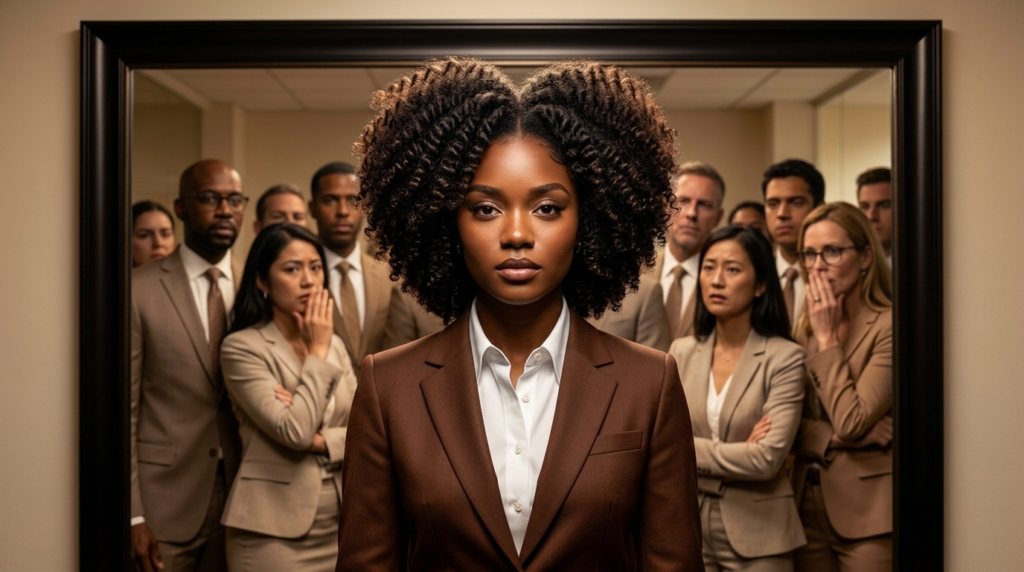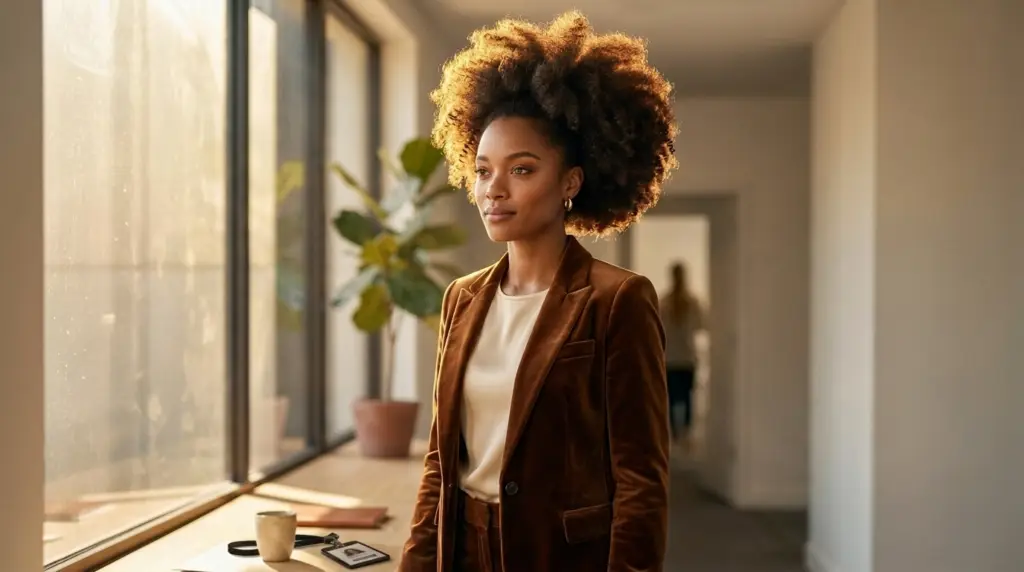
16 Interview hairstyles for Black women with natural hair.
There is no single correct interview hairstyle for Black women. A twist-out, locs, braids, a puff, a sleek bun, a silk press or a wig can all be interview-ready. What matters is that the style looks intentional, stays comfortable for as long as the interview runs, and lets you think about the conversation instead of your hair.
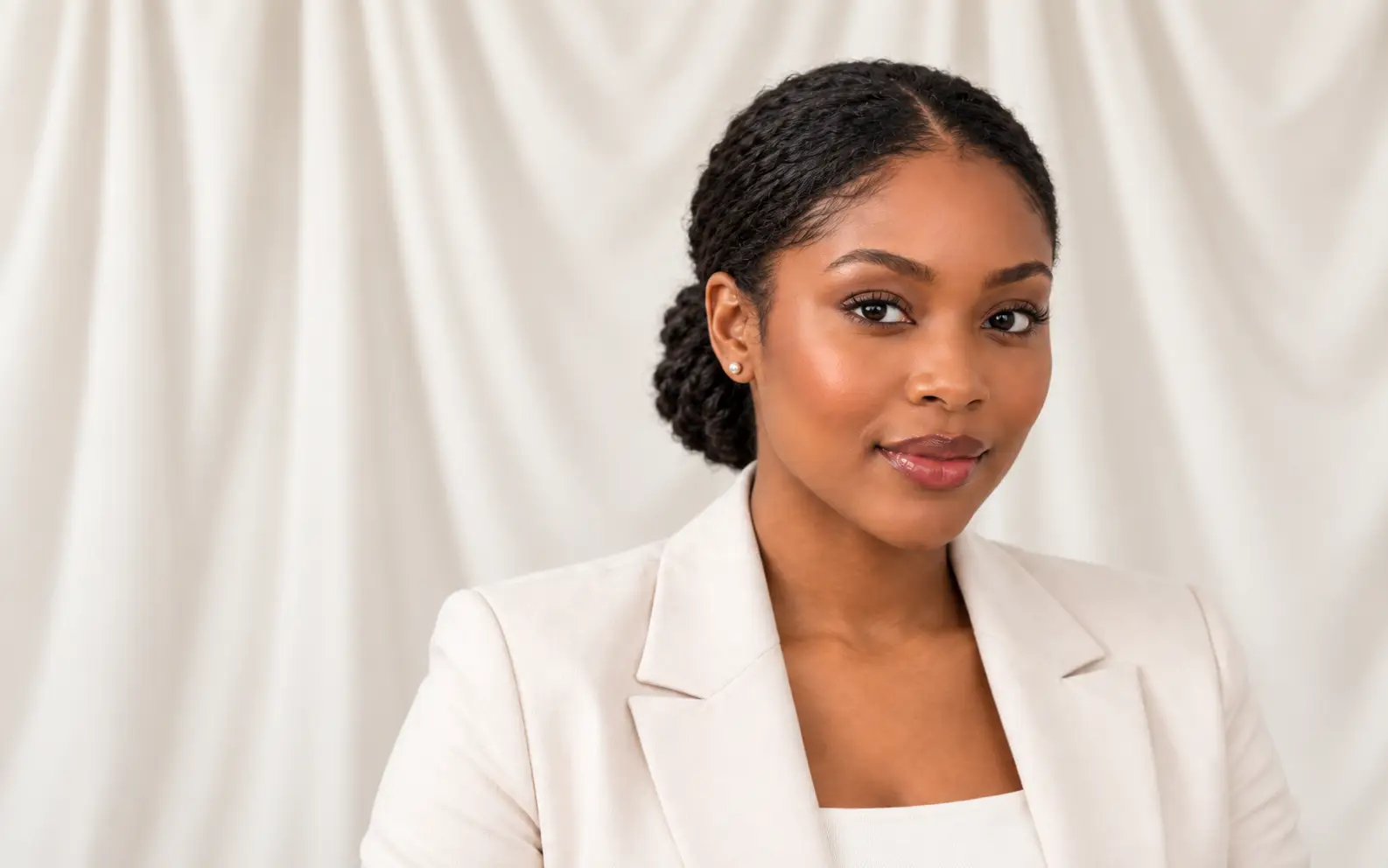
What hairstyles are appropriate for a job interview?
Polished natural styles all work: a sleek low bun, a twist-out, a defined wash-and-go, a low or high puff, flat twists, locs styled up or pulled back, braids, a silk press, a natural-looking wig, or an intentionally tied headwrap. Choose one that holds for the length of the interview and keeps your face visible.
No, you do not have to straighten your hair to be taken seriously.
Neat, finished and unbothered reads as professional in every texture. Fussing, adjusting and second-guessing is what a room actually notices — so the styling brief is stability, not straightness.
Black women say they have changed their hair for a job interview — most often from textured to straight.
That is the CROWN Workplace Research Study. It does not mean you must do it. It means the pressure is documented, the bias is the employer's problem, and in a growing number of states it is also illegal. See the CROWN Act.
What makes a good interview hairstyle?
Four questions sort it quickly: durability, visibility, familiarity and comfort. Ask whether the style survives the day you are about to have — not whether it is "allowed."
Will it hold for eight hours?
Humidity, a commute, three back-to-back panels. If it needs a mirror check, it is the wrong day for it.
Can they see your face?
Eyes, brows and jaw clear. Nothing you have to sweep back mid-sentence. That is the whole "polish" requirement.
Have you worn it before?
Interview day is not a first attempt. A style you have tested twice beats a better style you have never worn.
Could you keep it on day one?
If you would have to change it once hired, you are auditioning a person you do not plan to be. Expensive either way.
Neat is the standard. Straight was never the standard — it was only the assumption.
Keep reading ↓Interview hairstyles for Black women.
Every one of these is interview-ready. What differs is lead time and how forgiving each is on a humid, high-stakes morning. For more everyday options, see our guide to professional hairstyles for Black women.
Sleek low bun or chignon
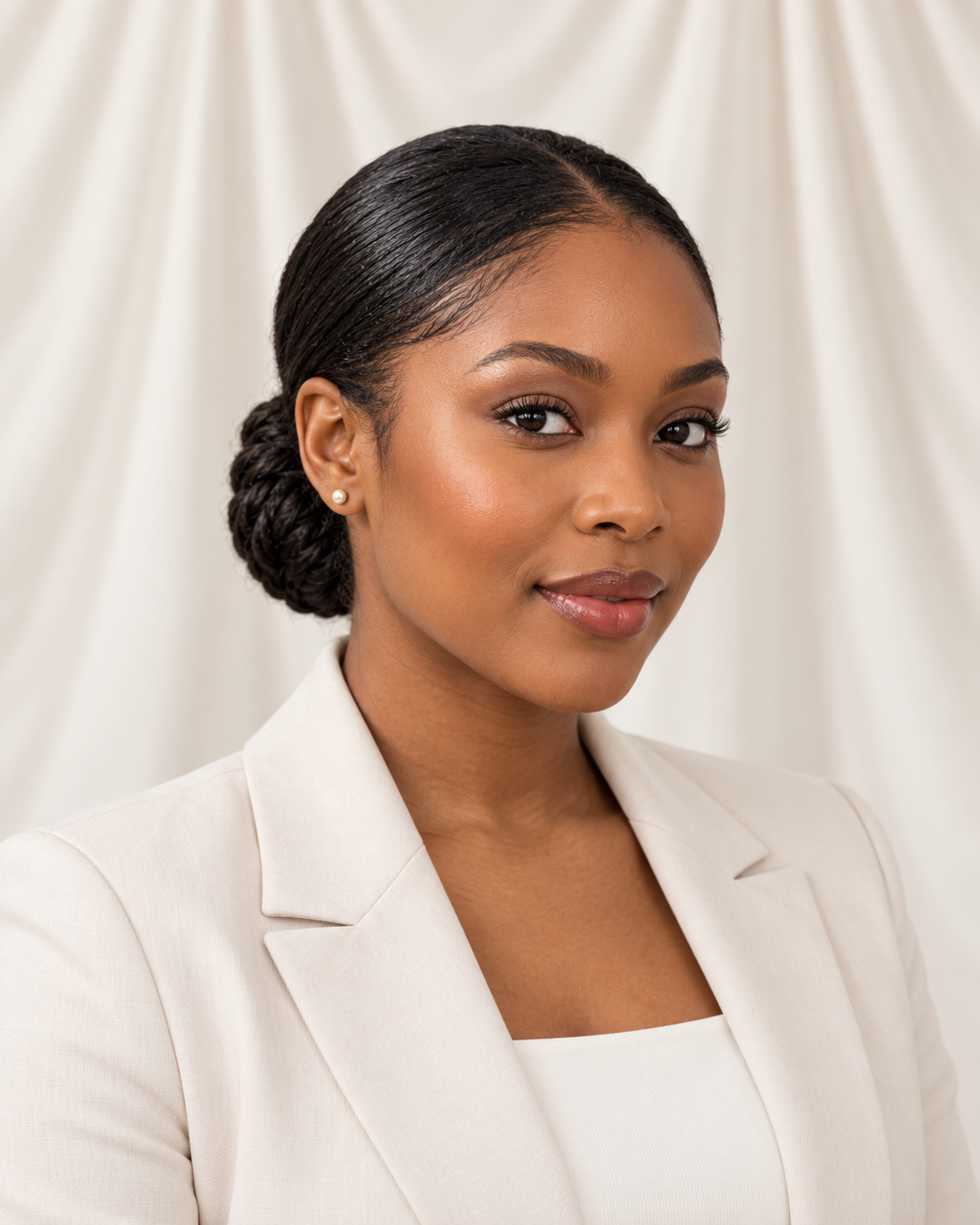
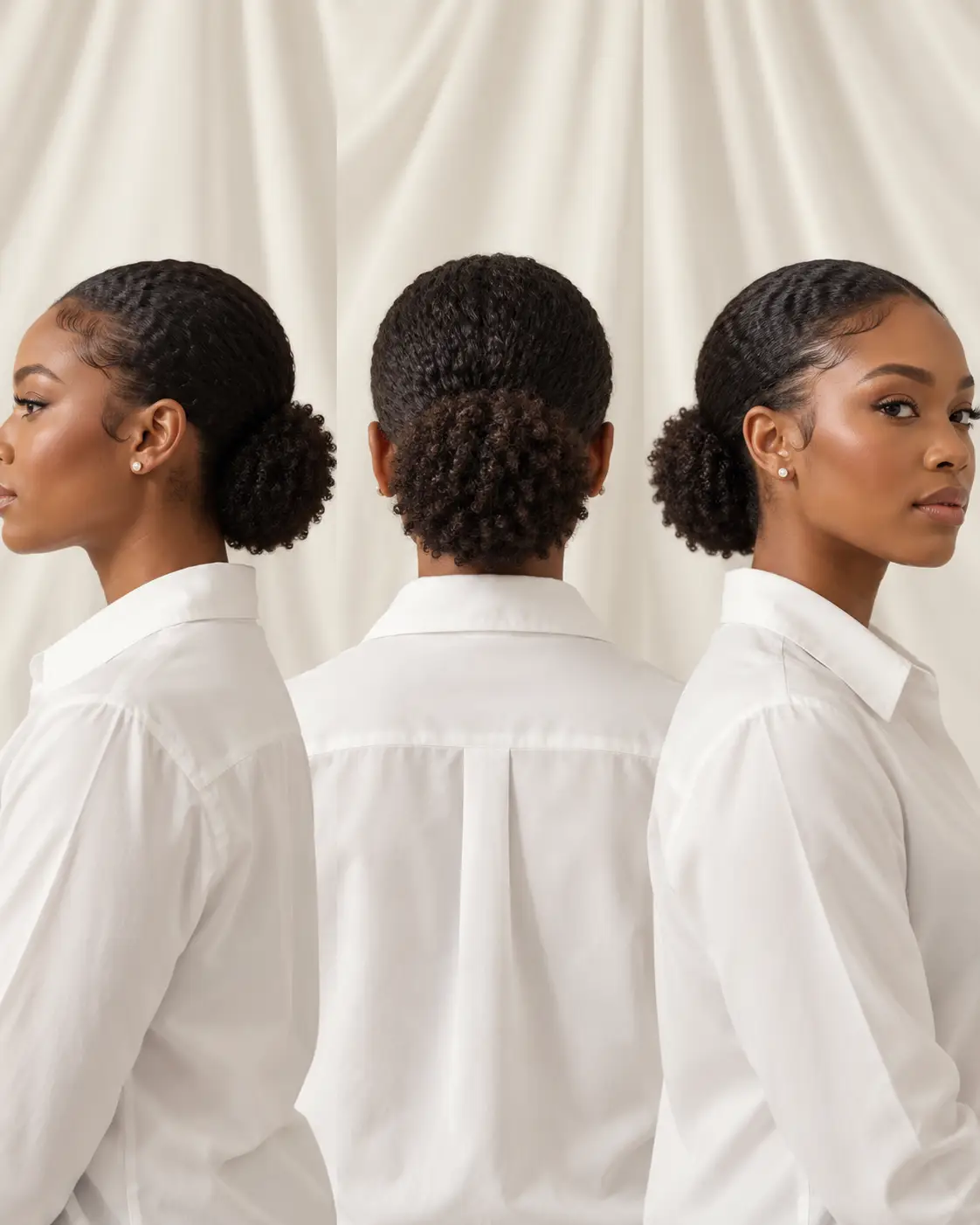
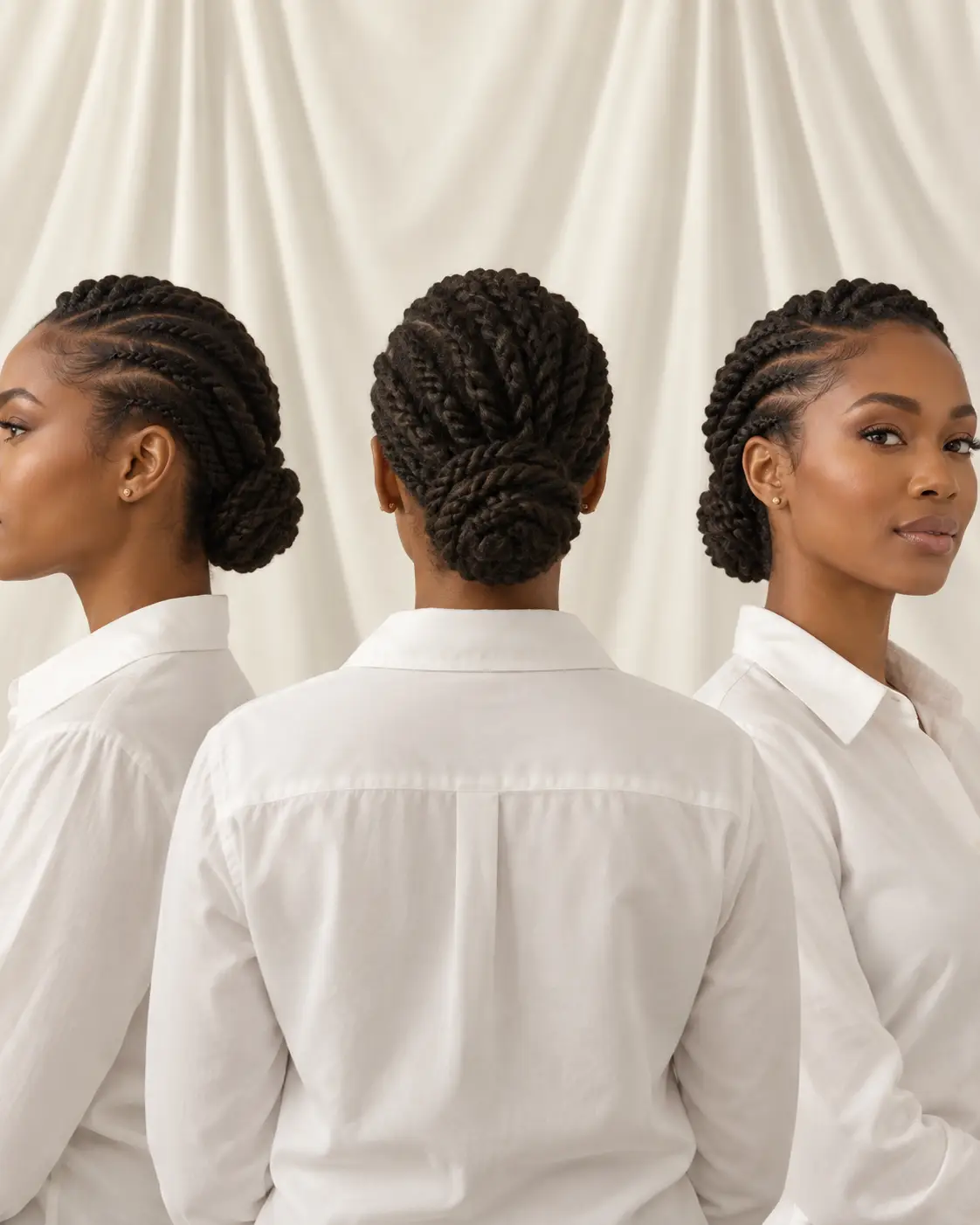
Smoothed back into a knot at the nape. It suits every texture, and braids or locs gather the same way.
PrepStretch or band hair the night before — a bun set on damp hair dries lumpy.
On cameraReads clean at any framing, so it is the safest pick for a laptop lens.
In the roomSnug, not surgical. A bun pulled too tight aches by hour three and it shows on your face.
Pin itTwist-out with one side pinned back
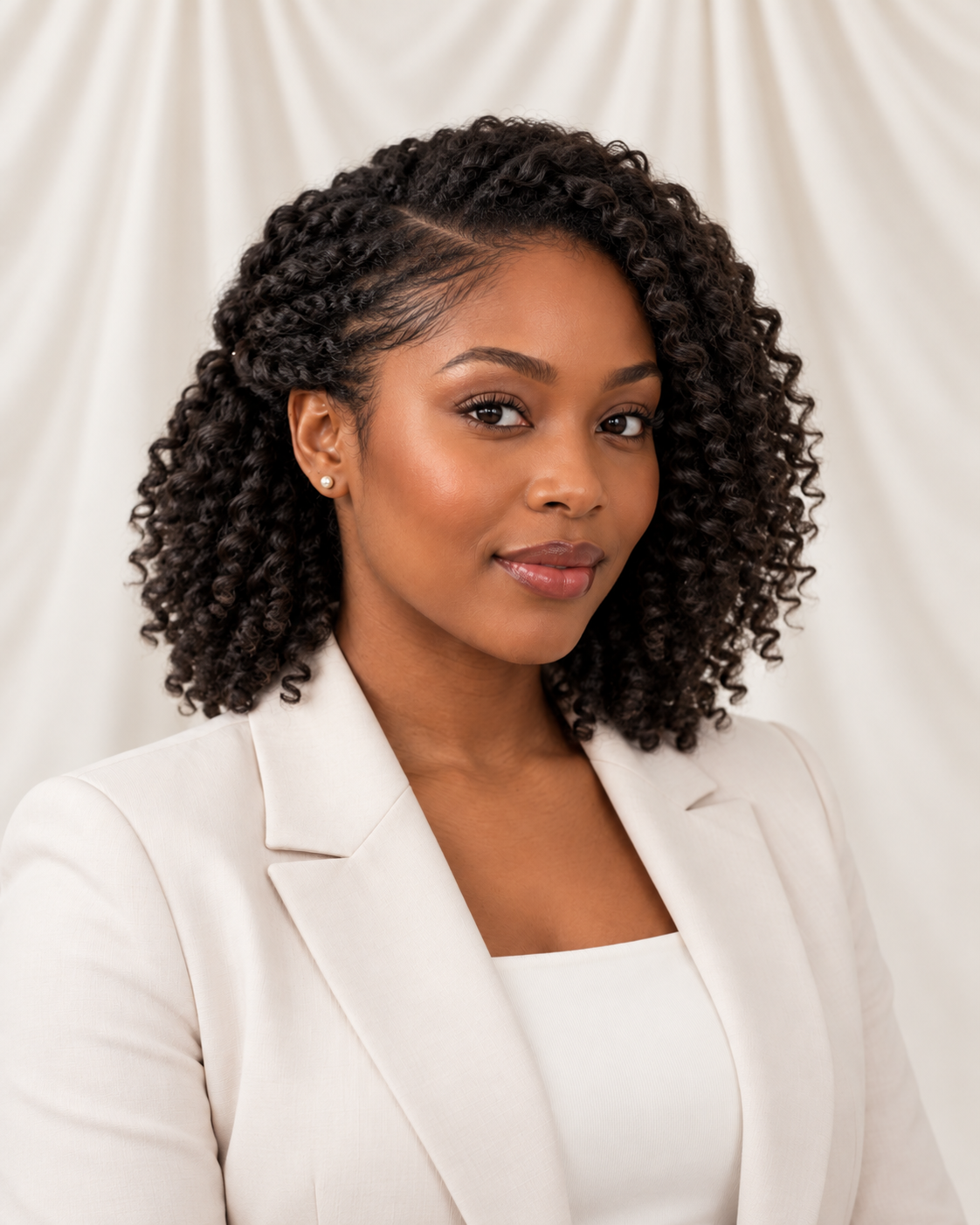
Defined coils with one side pinned away from your face — volume kept, sightlines clear.
PrepSet it two nights ahead and take it down the morning before, not the morning of.
On cameraPinning one side keeps texture visible while your eyes stay the brightest thing in frame.
In the roomFresh same-day sets shrink and separate unpredictably. Give it a night to settle.
Pin itDefined wash-and-go
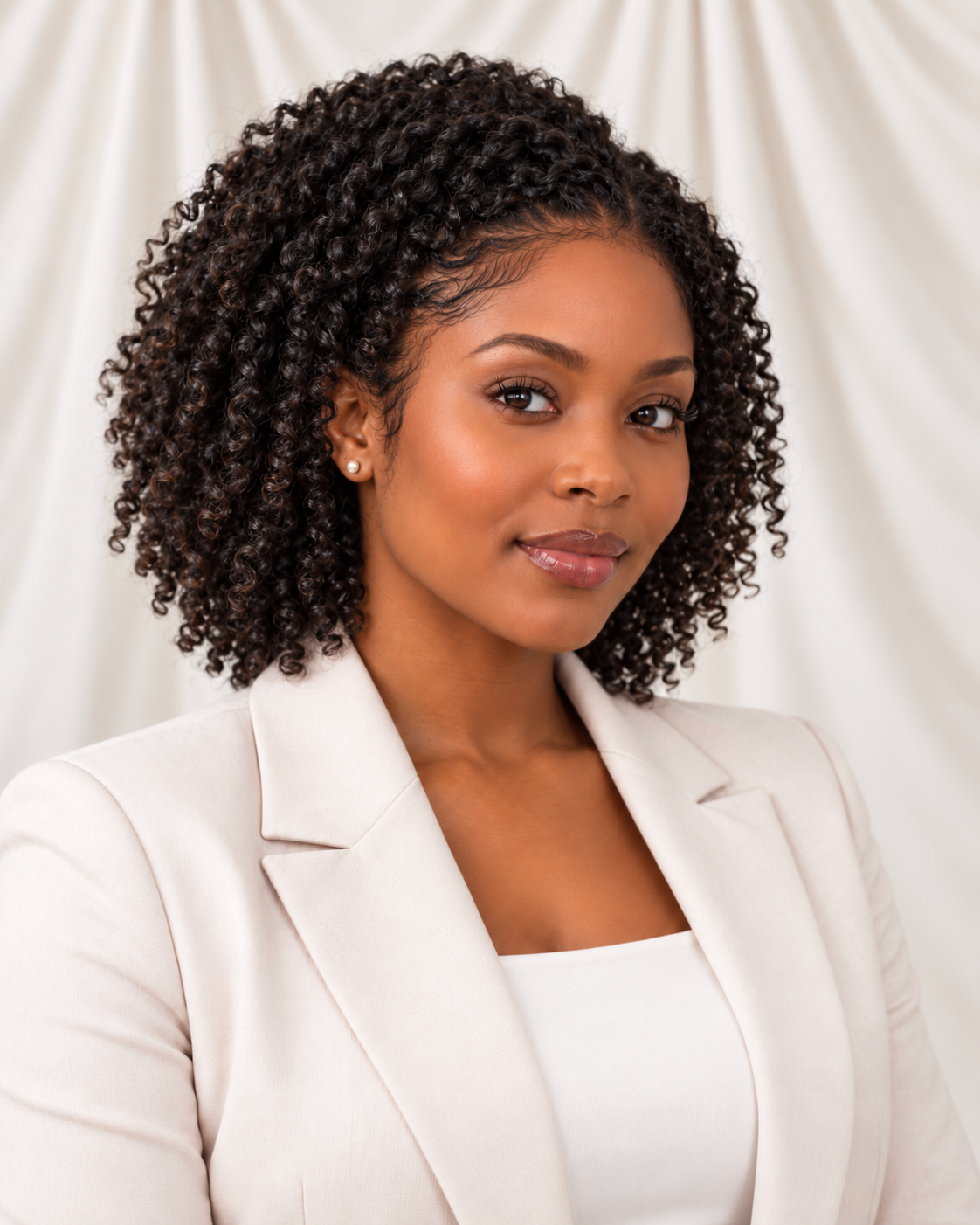
Your own curl pattern, defined and fully dry. Easiest on hydrated curls that dry quickly.
PrepWash the night before and diffuse dry. Damp roots on interview morning cost you an hour.
On cameraWarm front light keeps definition from flattening into one dark mass on screen.
In the roomHumidity is the variable here. If rain is forecast, wear something you set instead.
Pin itLow puff
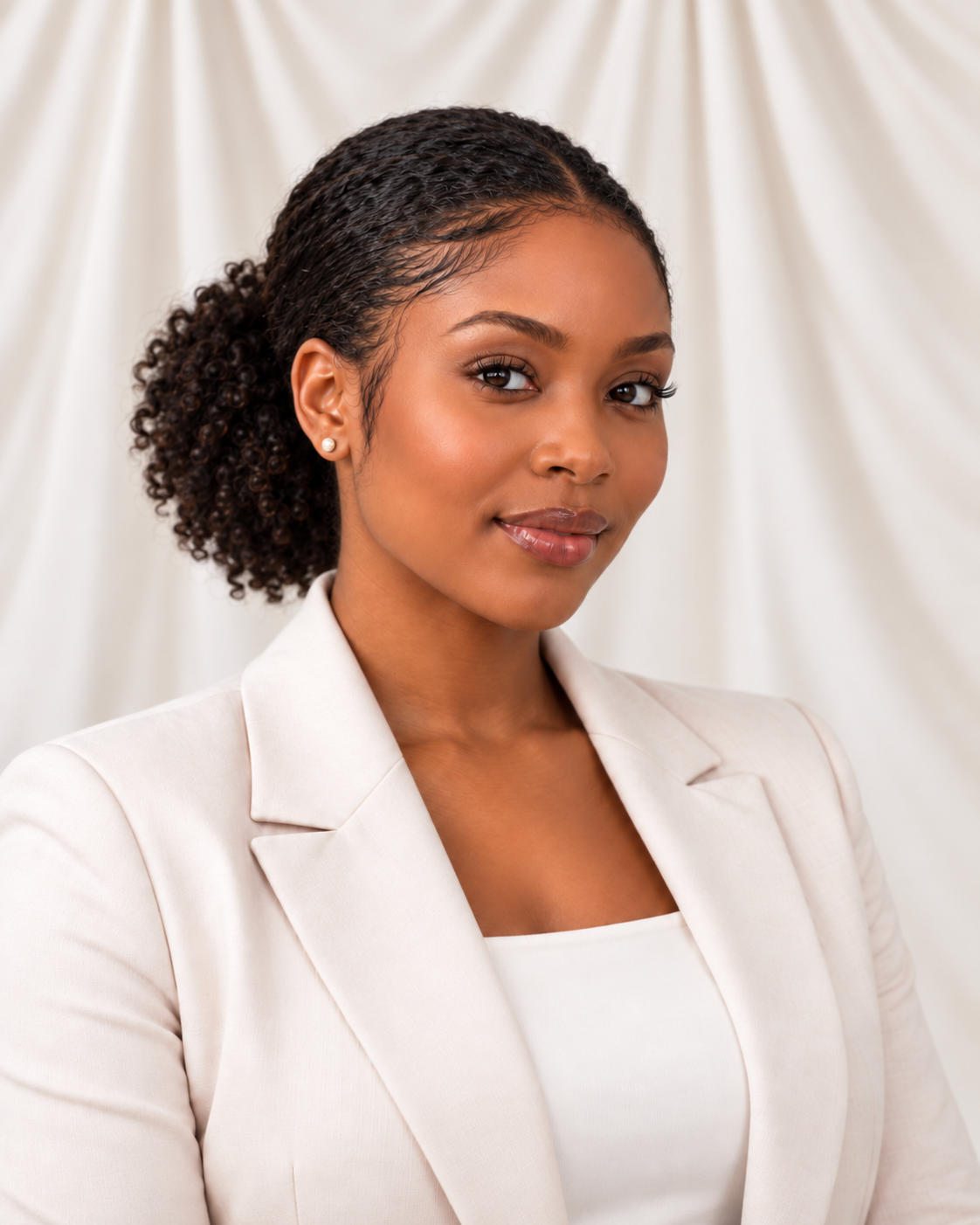
Gathered at the nape into a soft cloud of texture. Quick, comfortable, and it never leaves the frame.
PrepSmooth the front with a brush and a light gel, then leave the puff itself alone.
On cameraSits fully in frame even on a close crop, so there is no headroom problem.
In the roomUse a fabric-covered band. A thin elastic snaps edges and you will feel it all day.
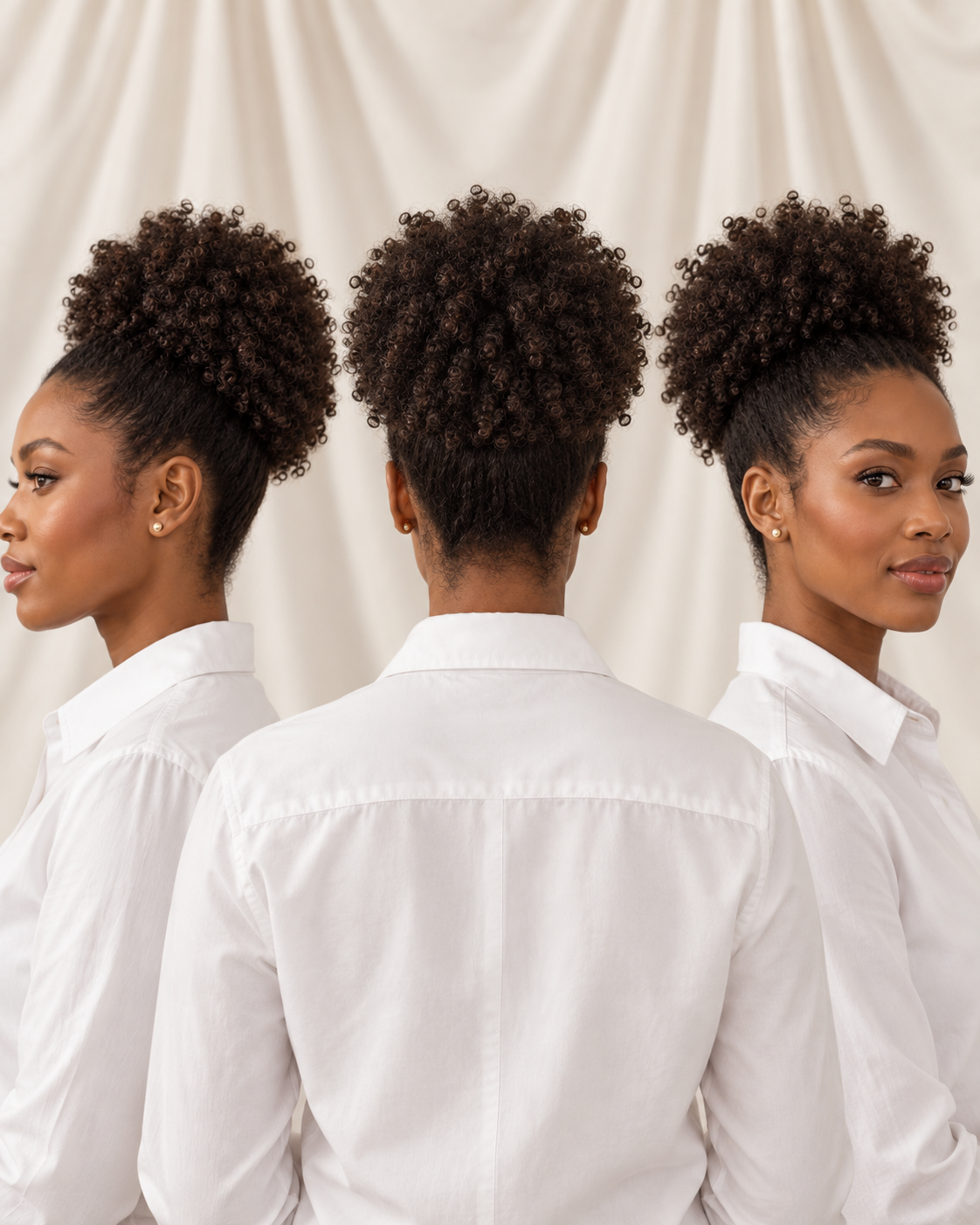
Pin itHigh puff
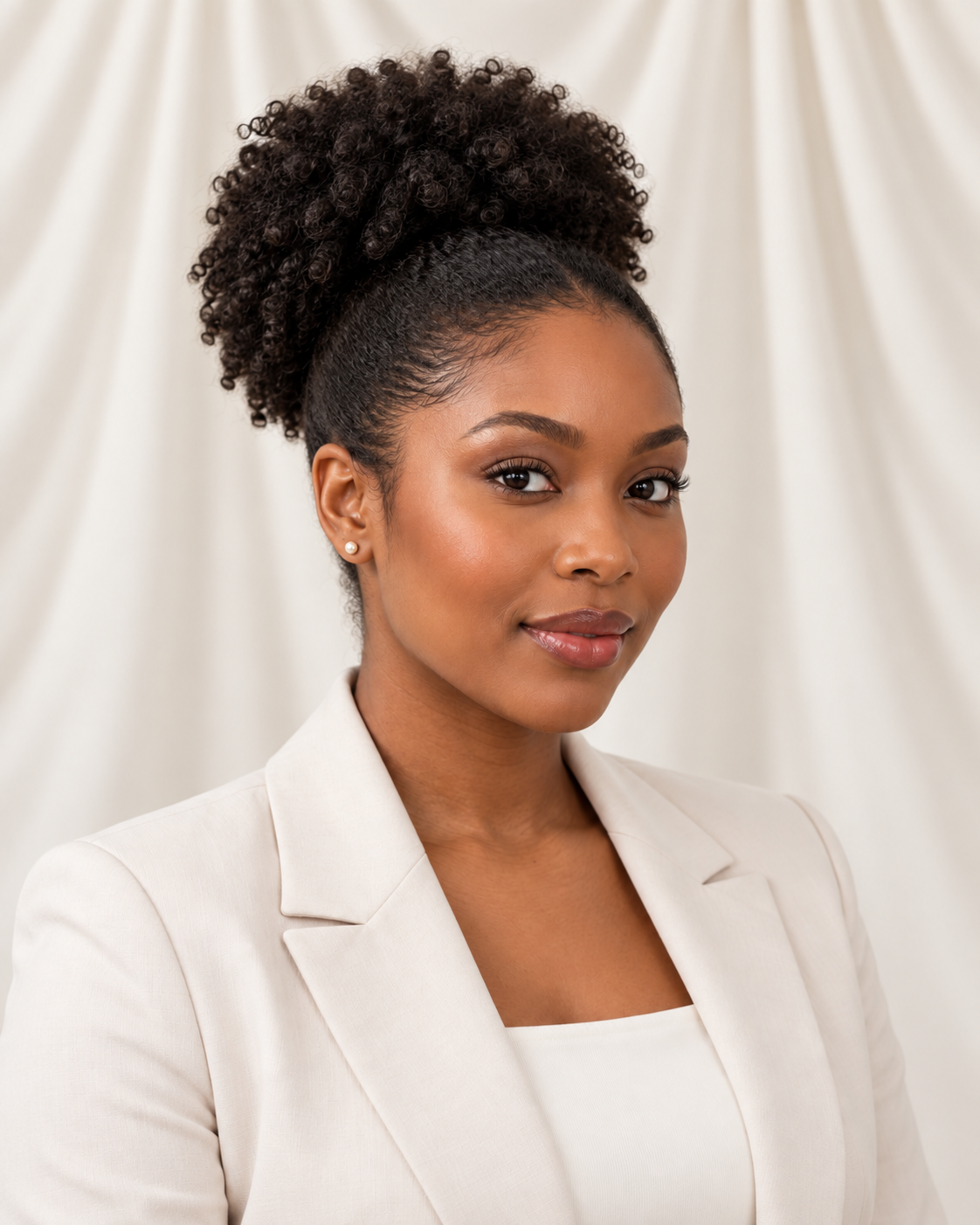
Lifted high with your face fully open. Striking in person and easy to wear for hours.
PrepPlace the band before your edges are fully set so nothing shifts later in the day.
On cameraRaise the laptop and leave headroom — a cropped puff is the framing error people notice.
In the roomA high seat can cut the top of the puff. Check your frame before you join.
Pin itFlat twists into a high bun
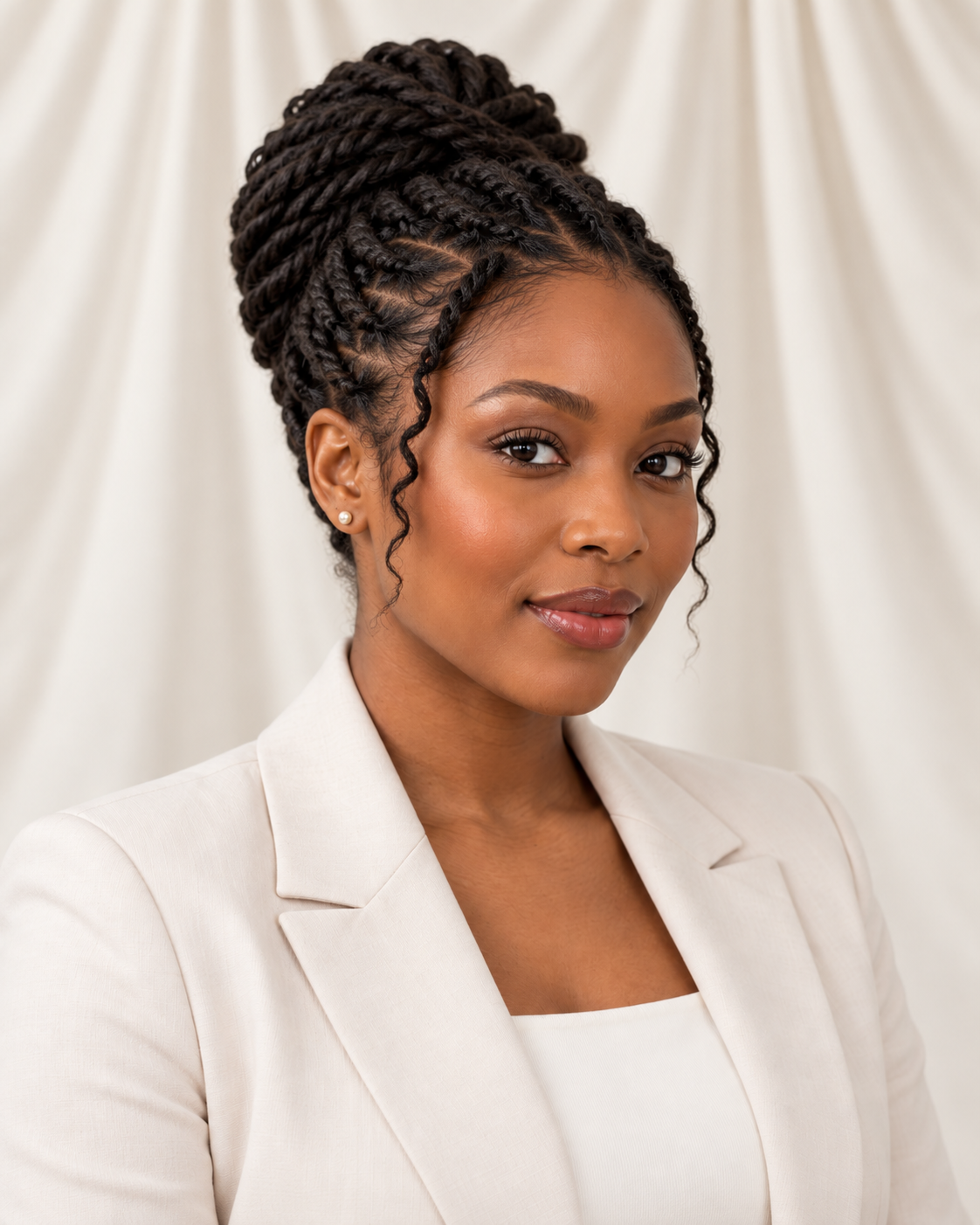
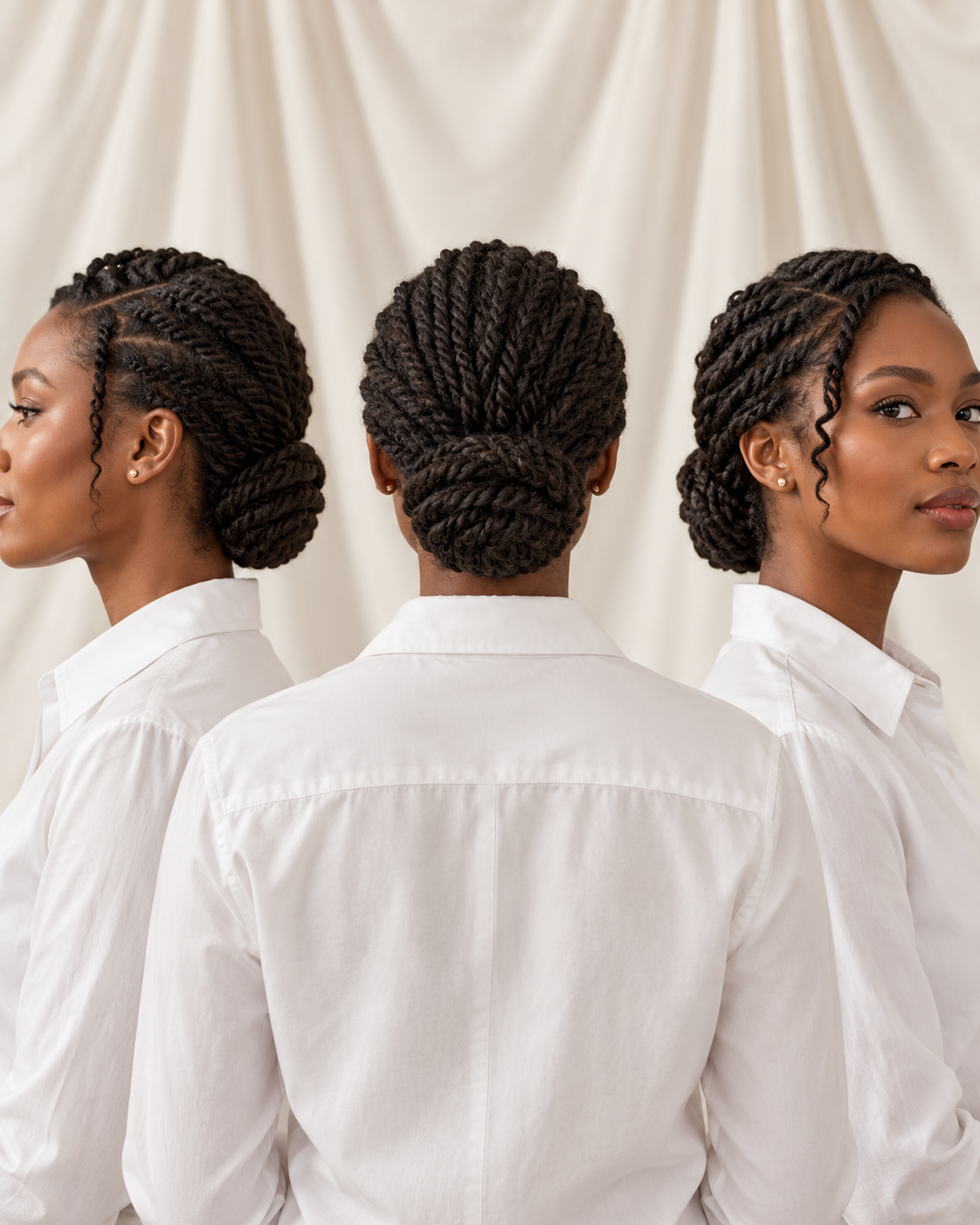
Twists laid along the scalp and gathered into a high bun or roll. Holds for days untouched.
PrepSet it three or four days out so the parts settle and your scalp calms down.
On cameraThe parting pattern reads beautifully on camera. Keep your light in front of you.
In the roomIntricate is not the goal. Two clean twists beat eight rushed ones.
Pin itLocs styled up
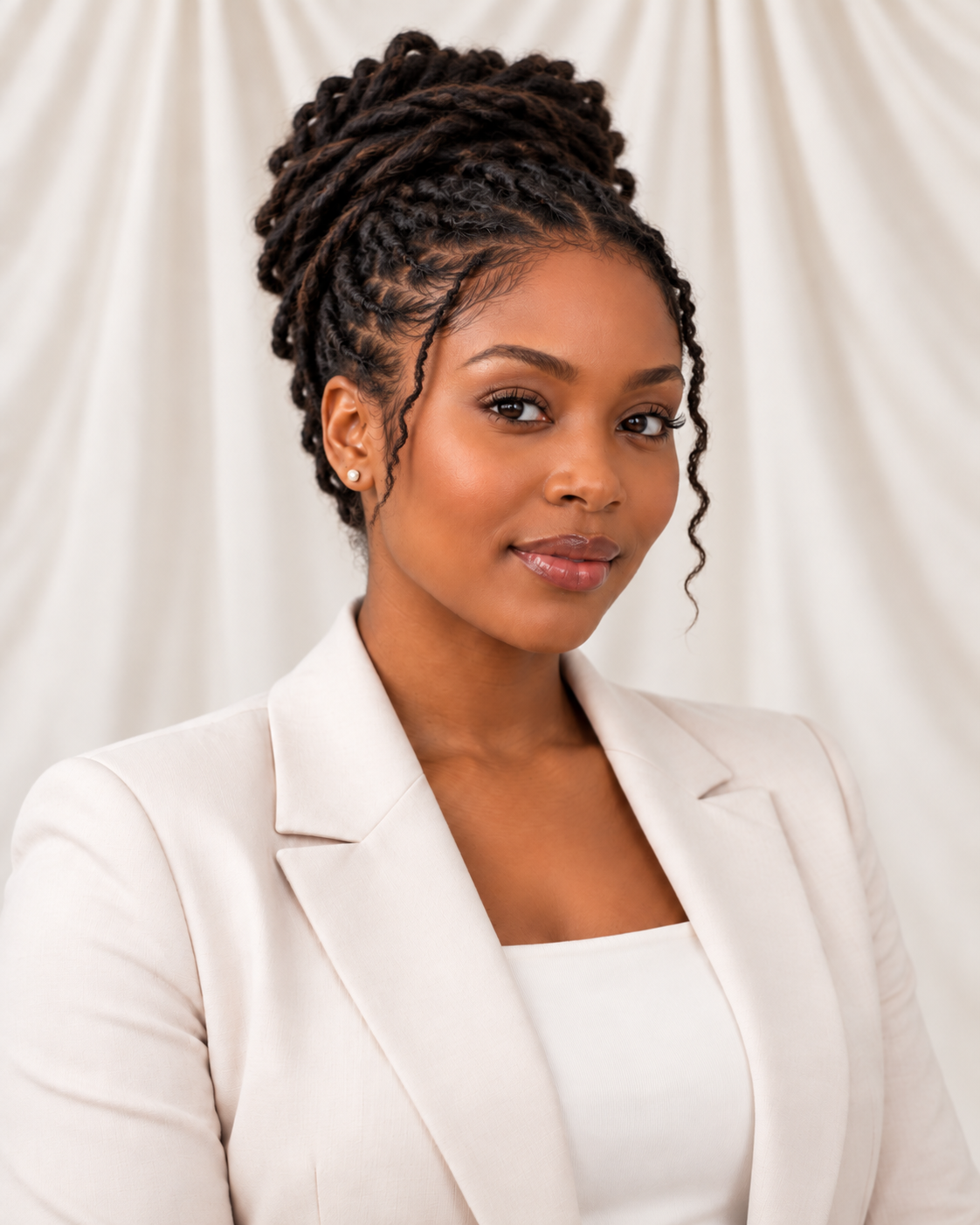
Locs gathered into an updo or a pinned crown. Nothing moves and nothing needs checking.
PrepRetwist three or four days out so roots are set rather than slick and shiny.
On cameraAn updo can sit above a tight crop. Sit back a few inches and re-frame.
In the roomSkip heavy oil the morning of — it flashes under overhead office light.
Pin itLocs or braids pulled back
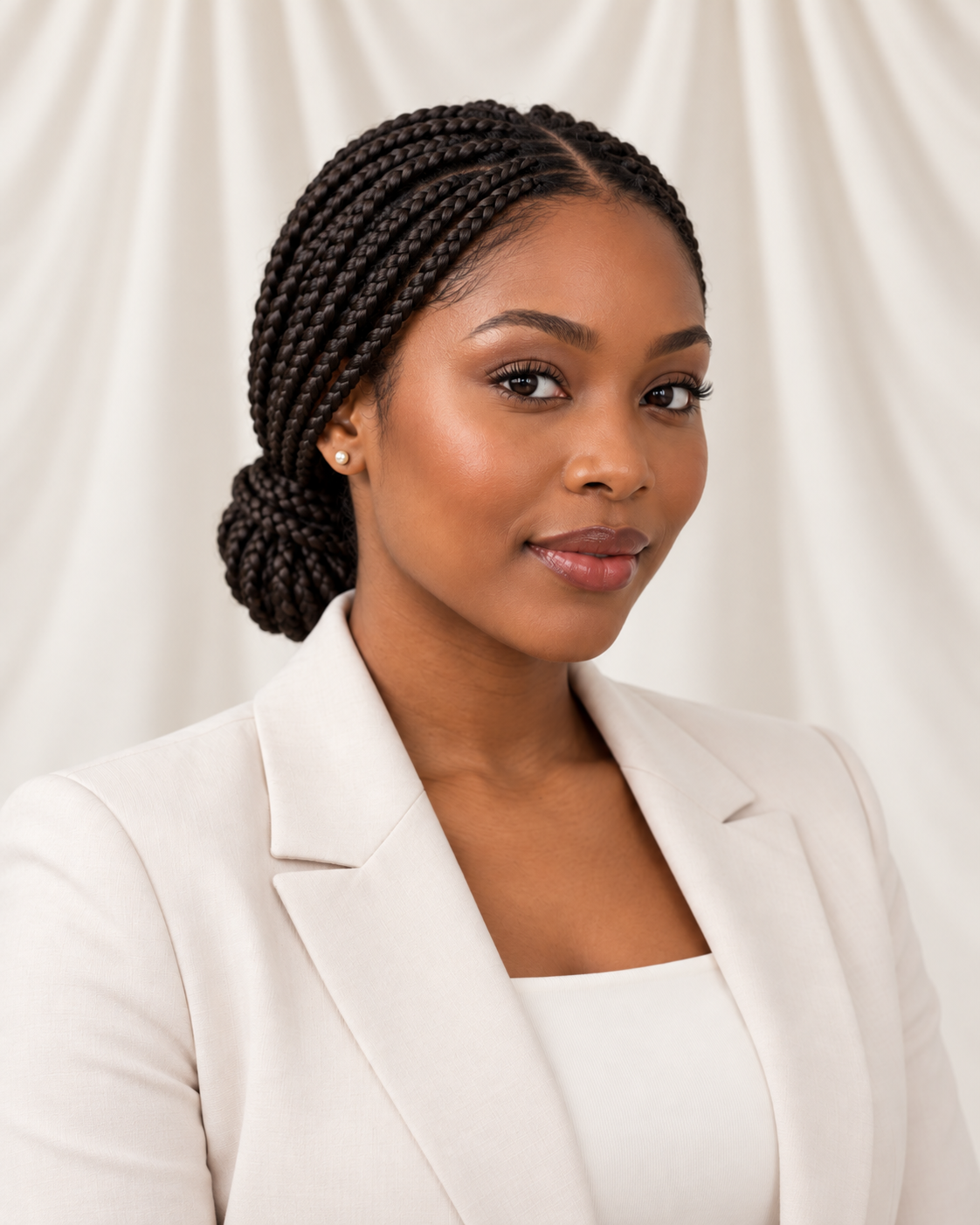
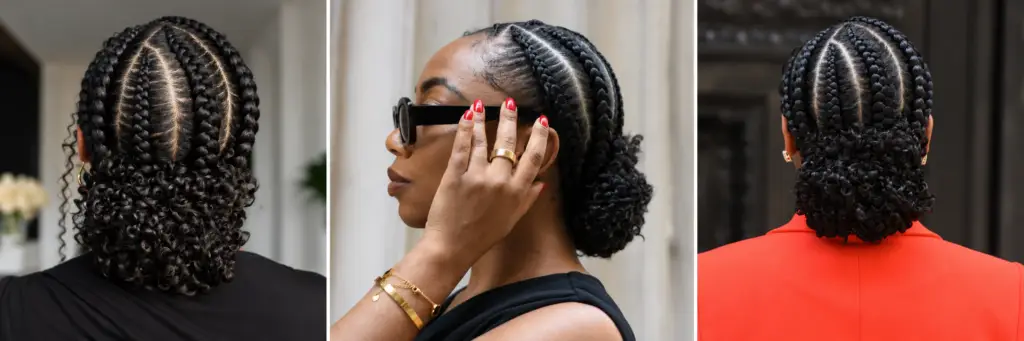
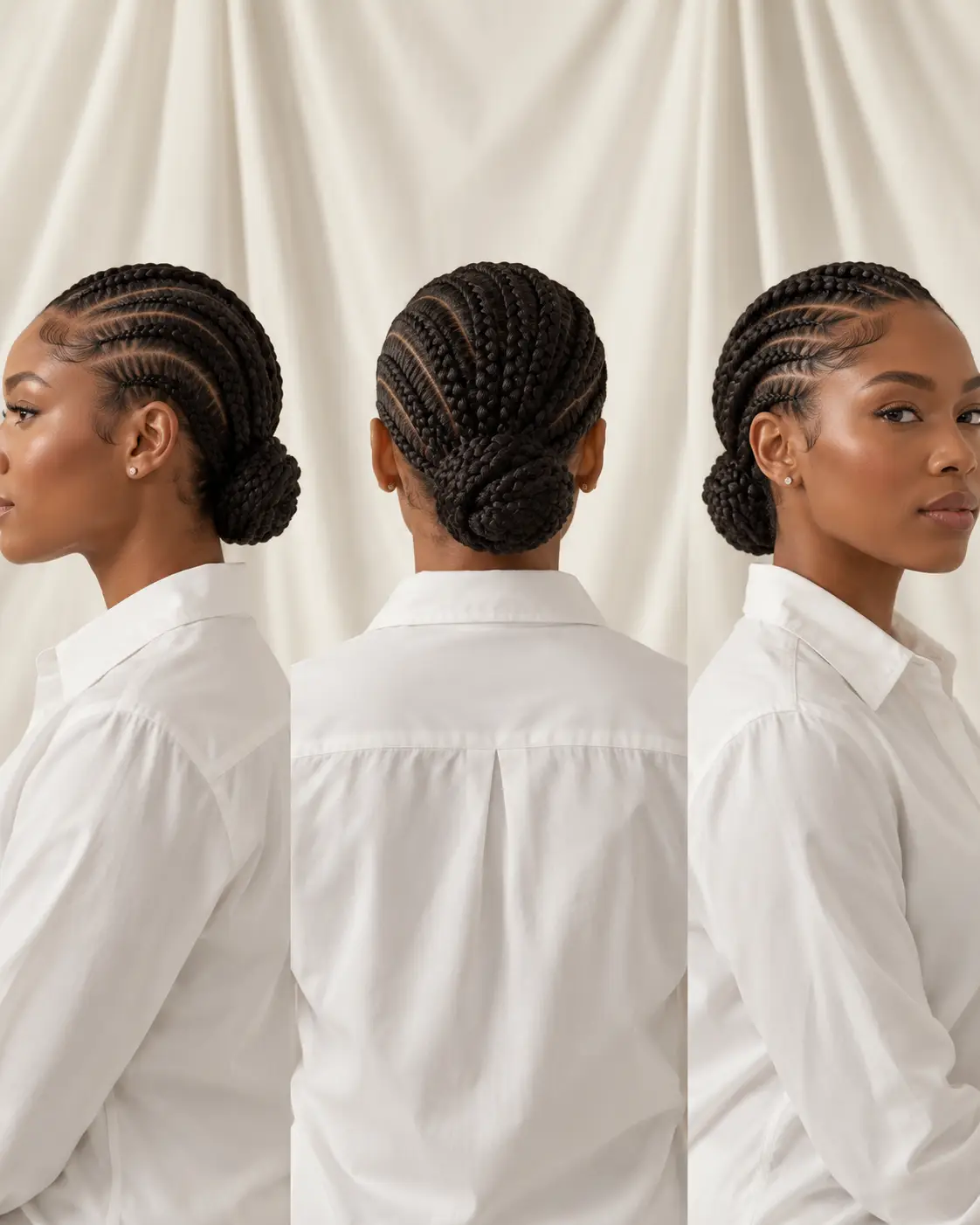
Shoulder-length locs, box braids or knotless braids swept back or gathered low. Neat for weeks.
PrepInstall at least four days ahead. Brand-new braids are tender and it shows.
On cameraLength behind your shoulders keeps the frame quiet and your face forward.
In the roomLength down the front drifts into your eyeline on a long panel. Gather it back.
Pin itSilk press or a natural-looking wig
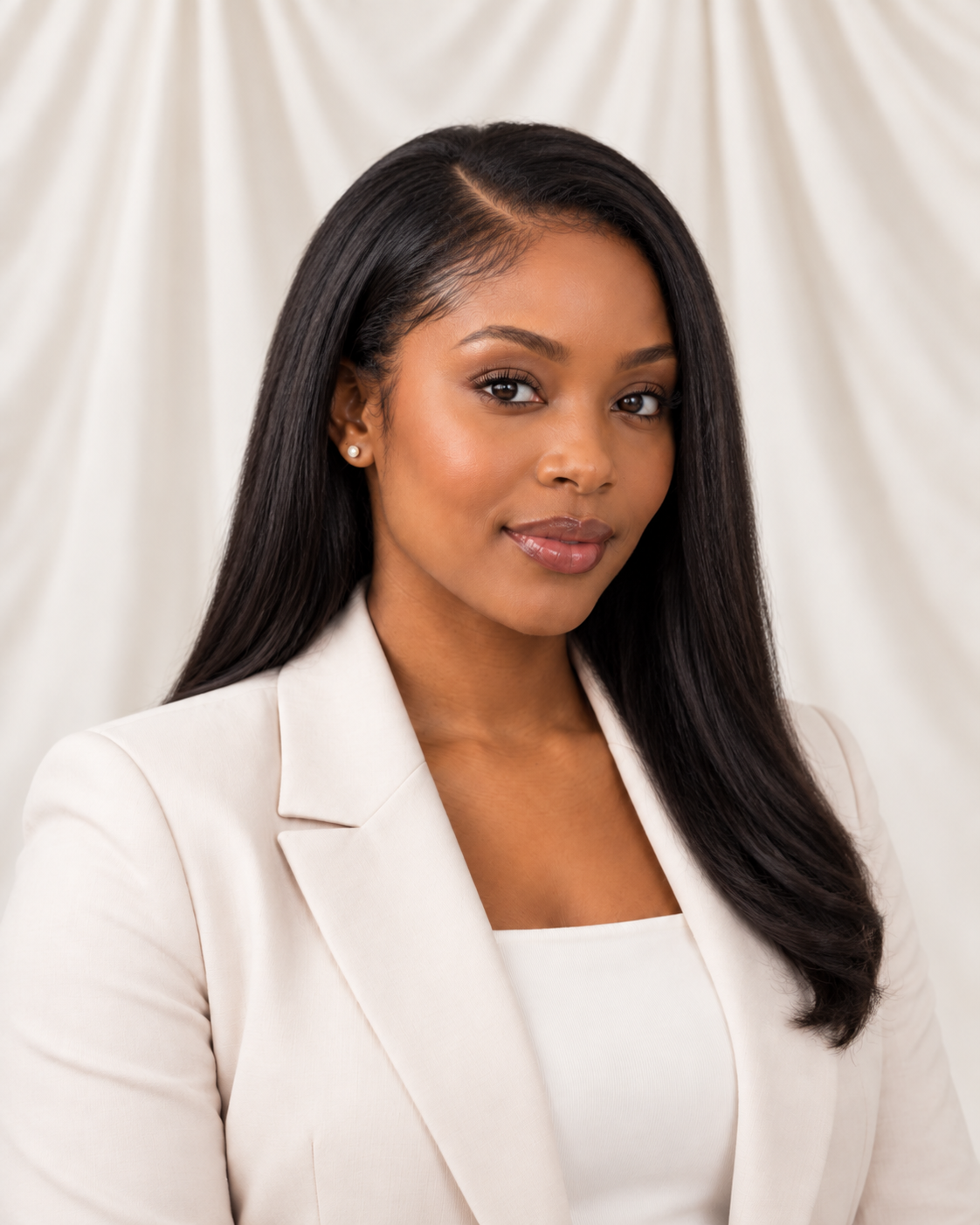
Smooth shoulder-length hair, pressed or a unit you like. A styling preference, never a requirement.
PrepWear a new unit for a full day first. A lace line you do not trust will eat your focus.
On cameraShine can blow out under a ring light. Soften the source or move it wider.
In the roomRain and a silk press do not negotiate. Check the forecast and carry a hood.
Pin itHeadwrap or turban
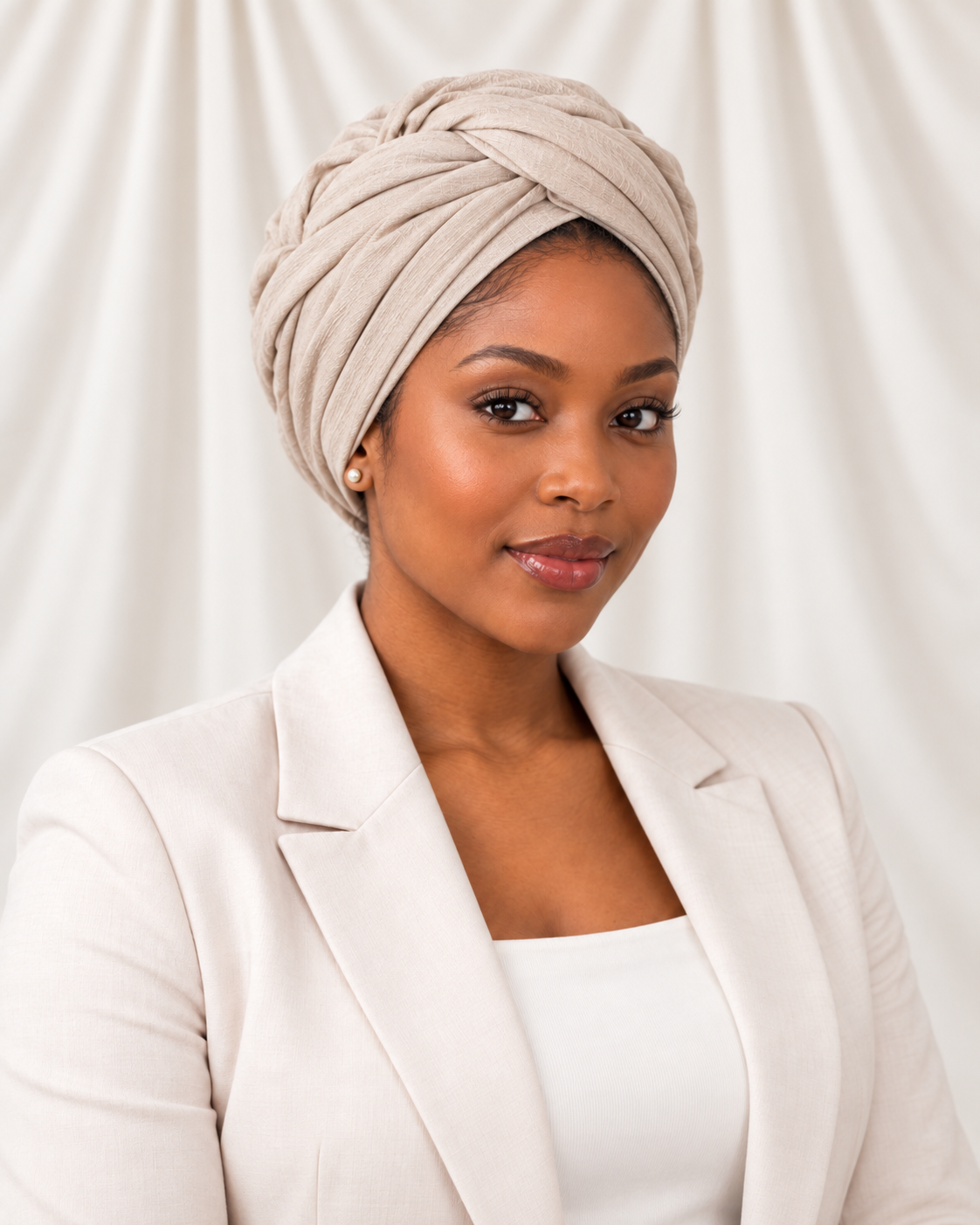
A structured wrap in a neutral fabric, tied deliberately. Ordinary in many fields, a question in a few.
PrepTie it the night before and wear it an hour so you know where it loosens.
On cameraA light wrap against a light wall disappears. Put some contrast behind you.
In the roomCheck the company's own photos first. Their team pages tell you more than any rule.
Pin itNot sure what a company actually accepts? Their careers page, LinkedIn team photos and employee posts are the honest answer — no dress code ever says "coils welcome."
Six natural hairstyles for interviews, from every angle.
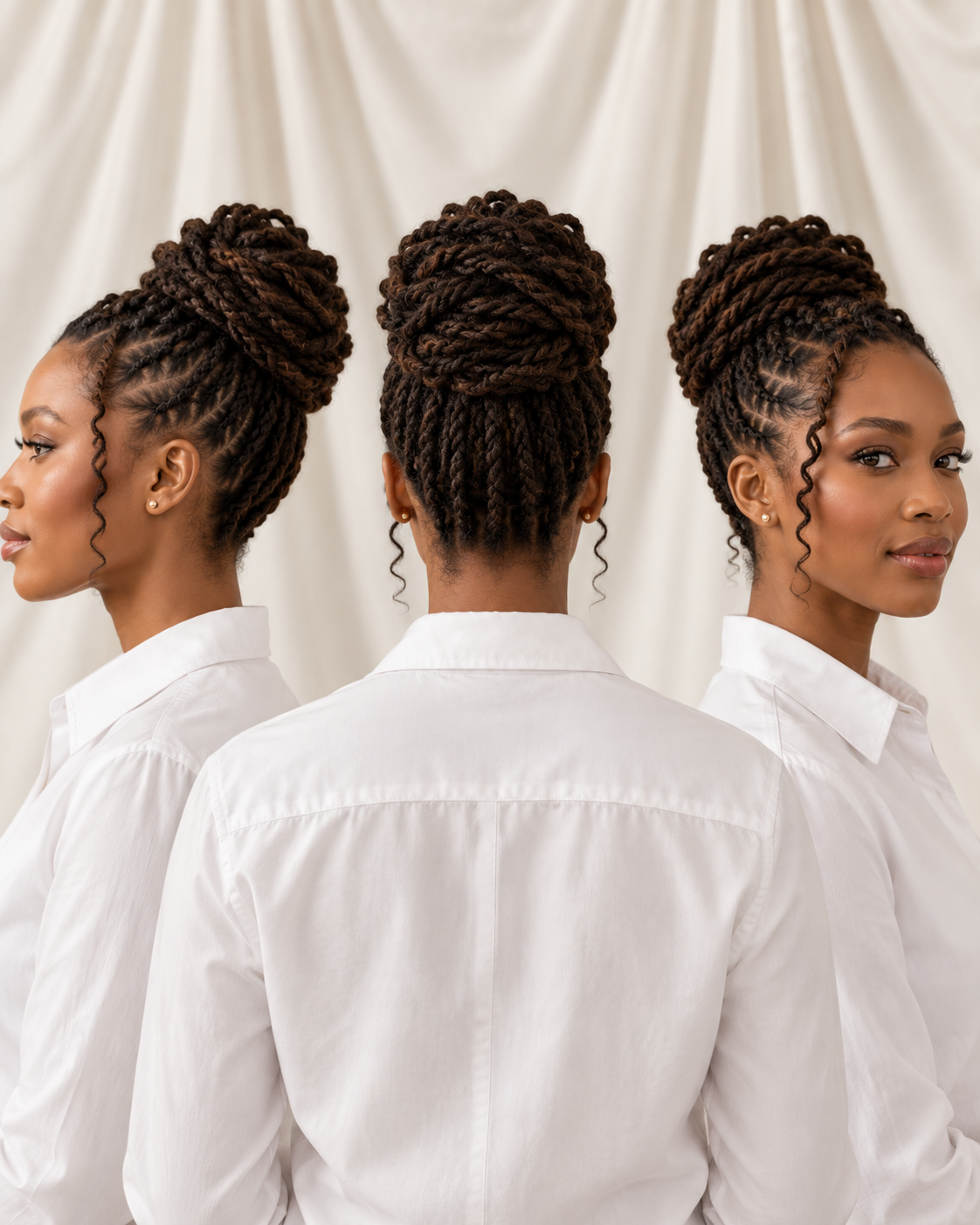
Your night-before interview hair checklist.
The mistake is doing your hair the morning of. Back the whole thing up and interview day becomes get dressed and leave.
Decide and book.
Pick the style. If it needs a stylist — braids, a retwist, a press — book it now for day three or four, never day one.
Wash and condition.
Clarify, deep condition, detangle fully. Clean hair takes a set; product-heavy hair does not.
Set it, then test it.
Twists, braids, install or press. Then wear the finished style for a few hours and see what moves.
Do the mirror check.
Full outfit, phone camera, front and profile. Fix the one thing that bugs you now, while there is still time.
Protect and pack.
Silk scarf or bonnet. In your bag: edge brush, two pins, small oil, elastic. Nothing that requires water.
- Style is finalised — nothing new tried tonight
- Hair wrapped in silk or satin before bed
- Pins, an elastic and an edge brush packed
- Webcam framing and lighting tested for a virtual round
- Forecast checked — rain or humidity plan ready
- Headset or earbuds tried on with the style in place
One rule above all of them: no new-to-you style, new stylist or new product inside 48 hours of the interview. Need hands on it? Find a Black hairstylist in Chicago with enough lead time to sit in the chair twice.
You are not there to be unobjectionable. You are there to be the obvious answer.
What about virtual interviews?
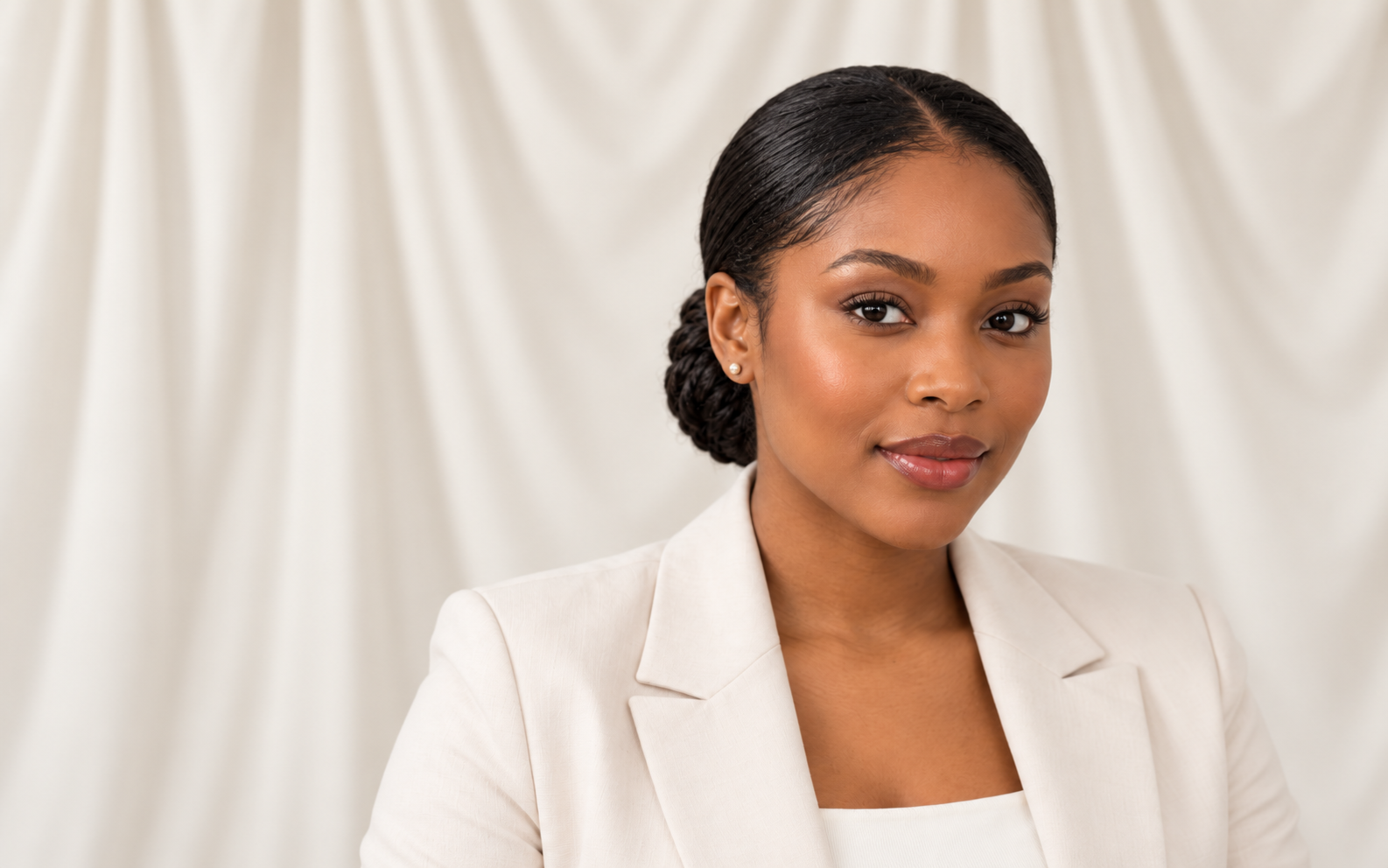
Textured hair on a laptop camera is mostly about where your light is and how much of your head is in frame. Four minutes of setup fixes all of it.
-
01Light your face from the front.
A window or lamp in front of you, never behind. Backlight turns volume into a silhouette and your face into a shadow.
-
02Leave headroom above your hair.
Raise the laptop to eye level and give yourself a few inches of space at the top. A cropped puff or updo is the one framing error people notice.
-
03Skip the virtual background.
Edge detection cuts into curls, coils and braids and flickers every time you move. A plain wall beats a blurred one.
-
04Record 30 seconds first.
Answer "tell me about yourself" on camera and play it back. You will spot the shine, the shadow or the strand in two seconds — and never think about it again during the real call.
Should you straighten your hair for an interview?
No. You do not need to straighten natural hair to be hired. A silk press, a blowout or a wig is a styling preference — speed, protection, a look you like — and any of those are fine reasons to choose one.
It is a poor reason when it is a flinch. If you would have to keep the style up for as long as you hold the job, you are auditioning a person you do not plan to be.
What if you wear locs or braids?
Wear them. Locs, box braids, knotless braids, cornrows and twists are among the most dependable interview styles there are — they hold for weeks, they need no morning rescue, and they photograph well on camera.
The only real prep notes are timing and tidiness: install or retwist at least four days ahead, and gather length back so it stays out of your eyeline through a long panel.
Hair discrimination is illegal in most of the country.
Not a technicality — a real protection you should know before you walk in, even if you never need to use it.
Texture and protective styles are covered.
More than 20 states plus many cities have passed CROWN Act laws barring discrimination based on hair texture and protective styles including braids, locs and twists. Check your state.
Race discrimination includes appearance rules.
A grooming policy applied unevenly by race can violate Title VII. EEOC guidance covers race and color discrimination in employment.
Write it down the same day.
A comment about "polish," "fit" or your hair in an interview is worth recording while the words are exact.
Log thisDate, who said it, their exact words, who else was present. Facts decide these cases; memory does not.
Also worth knowing: an interviewer's reaction to your hair is data about them. A place that flinches at your texture on day zero will flinch at your voice on day ninety.
Four lines for when your hair comes up.
Warm, short, and it hands the conversation straight back to the job. Learn one so it is already in your head.
"I'd rather not — but I'm glad you like it. Where were we on the team structure?"
"It's how my hair grows. Is there something specific in the dress code I should know about?"
"How would you describe the culture here around self-presentation — how much room do people have to look like themselves?"
"Thank you. Can you tell me which specific requirement of the role I didn't meet, so I have something concrete to work on?"
If they cannot handle your hair in an interview, they cannot handle your ideas in a meeting.
Everything you were about to google at midnight.
Is natural hair unprofessional for a job interview?
No. Professional means groomed and intentional, not straight. A twist-out, puff, braids, locs or a bun all meet that bar. Where texture gets read as "unprofessional," that is bias — and in most states, illegal bias — not a grooming standard you failed.
Should I straighten my hair for an interview?
Only if you want to. A silk press is a fine choice for its own reasons — speed, a look you like, a style that holds. It is a bad choice if it is a flinch, because you will then be managing that decision for as long as you hold the job.
Are braids, cornrows and locs okay for interviews?
Yes, and they are among the most reliable options because they hold for weeks without touch-ups. Keep the install neat, gather length into a low bun or half-up for a cleaner silhouette, and give a fresh install at least four days to settle.
Wash-and-go or twist-out for interview day?
Twist-out, set two nights ahead. A wash-and-go depends on drying time, humidity and luck on the morning you have the least margin for any of the three.
What about colored hair — burgundy, honey, copper?
Warm natural-range color is unremarkable almost everywhere. Vivid color is industry-dependent: read the company's own team photos. And if colored hair would cost you the offer, it would also have cost you a fair review later.
Can I wear a headwrap to an interview?
Yes — and if it is worn for faith, that is protected and not up for negotiation. Otherwise it lands easily in creative, education, cultural and nonprofit settings, and may draw a question in a traditional finance or legal panel. Choose knowing which room you are in.
How should I do my edges and baby hairs?
Lightly, and hours before you leave. Heavy gel goes white and flaky under office light and on camera. If a style needs a lot of product to look finished, it is not the style for an eight-hour day.
Someone commented on my hair in the interview. Now what?
Redirect in the moment with one of the lines above, then write down the exact words and the date that same day. Treat it as information about the employer while you decide — and if the comment shows up in the rejection, ask which role requirement you did not meet.
Sources: The CROWN Act · CROWN Workplace Research Study · EEOC guidance on race and color discrimination
The interview is about your work.
Pick the style that lets you walk in prepared rather than preoccupied. Coils, locs, braids, a bun, a press — any of them can carry a panel when it is finished, comfortable and already familiar to you.
Explore professional hairstyles for Black women →You got the offer. Now the harder part.
Workplace advice with an actual point of view.
Scripts, strategy and the conversations nobody prepared you to have.
Open the desk → Pay equityYour coworkers make more. Now what?
Verify the comparison, protect the record, ask for a formal pay review.
Read the guide → ManagementYour job isn't that hard. Your manager is.
Separate a development gap from the management problem blocking your work.
Read next →What did you wear your hair in — and did you get the job?
Twist-out, braids, bun, press, wrap. Tell one woman who is interviewing this week what she can stop worrying about.
Add your experience below ↓General career information, not legal, HR or employment advice. Hair discrimination protections vary by state and city. Seek qualified guidance for your situation.